Office Cleaning Standards And Workplace Hygiene In Cagayan De Oro Guide
Learn office cleaning standards and workplace hygiene in Cagayan de Oro: a guide to healthier work environments—set routines, assign roles, and audit cleaning to cut odors and sick days.
Feb 12, 2026
Need a spotless space without interruptions?
PrimeShineCDO Cleaning Services uses punctual teams, clear checklists, and efficient cleaning methods for residential cleaning, sofa cleaning, carpet cleaning, and post-construction cleaning.
Contact UsClean offices don’t happen by accident. They happen when you set clear expectations, build a repeatable routine, and audit it like you would any other business process. And in a busy, humid, high-foot-traffic city like Cagayan de Oro, “good enough” cleaning quickly turns into odors, sticky floors, dusty vents, and sick days. 😷
This step-by-step guide on office cleaning standards and workplace hygiene in Cagayan de Oro: a guide to healthier work environments shows you how to set practical standards, assign responsibilities, and keep your workplace consistently sanitary—without disrupting operations.
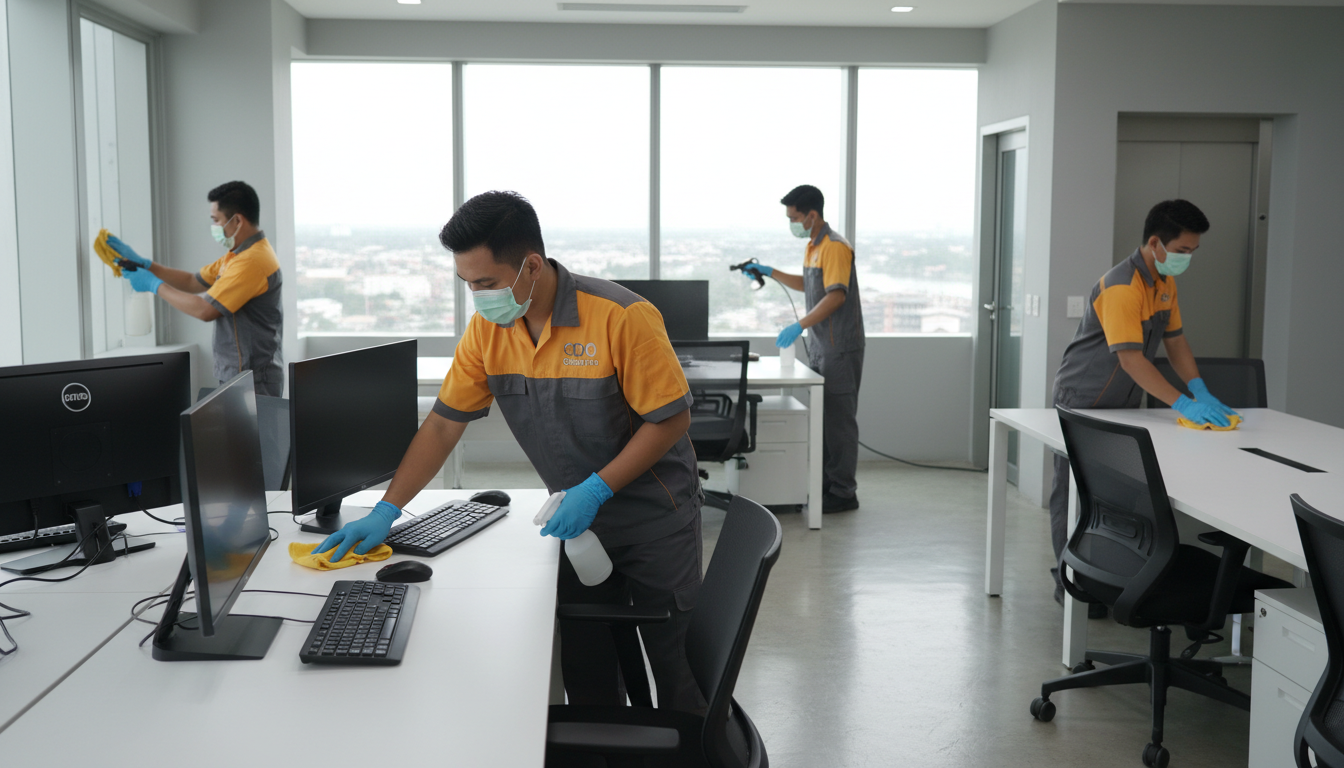
Why office cleaning standards matter in Cagayan de Oro 🧼
Let’s be honest: a messy office isn’t just “untidy.” It’s a productivity leak, a reputation risk, and a health issue rolled into one.
In CDO, these factors make standards even more important:
- Humidity + aircon = faster odor build-up, damp corners, and dust accumulation in vents
- Rainy season foot traffic = muddy entryways, slippery floors, and grime on tiles
- Shared workstations = higher risk of germ transfer via high-touch surfaces
- Clients visiting your space = cleanliness becomes part of your brand promise
The takeaway is clear: you need a documented, repeatable cleaning system—not random “when someone remembers” cleaning.
Your step-by-step system for office cleaning standards (CDO-ready) ✅
Step 1: Define your “clean” (set measurable office cleaning standards) 📋
If you can’t measure it, you can’t maintain it. Start by writing a simple Office Cleaning Standard (OCS) that describes what “clean” means in your workplace.
Use these criteria:
- Visual standard: no dust lines, no streaks, no stains, no trash overflow
- Touch standard: desks and pantry counters feel non-sticky, no greasy residue
- Odor standard: neutral smell—no “kulob” rooms, no stale pantry odor
- Safety standard: floors are dry, non-slippery; cords and clutter cleared
Here’s a straightforward baseline you can adopt immediately:
| Area | Standard (what “clean” looks like) | Acceptable frequency |
|---|---|---|
| Workstations | Wiped and disinfected; no dust on monitors/CPU tops | Daily (light), weekly (detail) |
| Restrooms | Toilets, sink, and handles disinfected; no odors; stocked supplies | 2–3x daily (busy offices) |
| Pantry | Counters disinfected; sink cleared; no food residue; bin emptied | Daily + after peak use |
| Floors | No grit at entry; no sticky spots; corners free of hair/dust | Daily sweep/mop |
| Glass & doors | No fingerprints on handles; glass streak-free | 2–3x weekly |
| Aircon vents | No visible dust build-up | Monthly check; quarterly deep clean |
If your team argues about whether something is “clean,” your standards are too vague.
Step 2: Map your office zones (and identify “high-risk” hygiene areas) 🗺️
Walk your office and divide it into zones. This stops you from over-cleaning low-risk areas and under-cleaning the real problem spots.
Recommended zone list for most CDO offices:
- Reception / client area
- Workstations / admin area
- Meeting rooms
- Pantry / break area
- Restrooms
- Entryway / shoe-mat zone
- Storage / supply area
Then label the hygiene risk level:
| Risk level | Examples | Why it matters |
|---|---|---|
| High | Restrooms, pantry sink, door handles, shared keyboards, water dispenser buttons | Most germs + shared touchpoints |
| Medium | Meeting tables, reception chairs, printer areas | Mixed usage, frequent contact |
| Low | Storage shelves, unused rooms | Less contact, slower soil build-up |
This is how you prioritize without wasting time.
Step 3: Build a CDO-appropriate cleaning schedule (daily, weekly, monthly) 🗓️
A schedule is your “automatic pilot.” It also makes handovers easier when staff changes.
Use this simple sequence:
Daily (non-negotiable)
- Empty trash bins (especially pantry + restroom)
- Disinfect high-touch points:Door handlesLight switchesFaucet handlesShared keyboards/mouse (if applicable)Phone receivers
- Sweep and mop floors (extra focus: entryway)
- Restroom clean + restock:SoapTissueHand towels (if used)
Weekly (detail clean)
- Dust all horizontal surfaces (tops of shelves, monitor backs, ledges)
- Clean glass partitions and front door glass
- Wipe chair arms and fabric-safe spot clean where needed
- Pantry deep wipe (appliances exterior, shelves, tiles backsplash)
Monthly / quarterly (deep hygiene)
- Aircon vent inspection and dust removal
- Behind/under furniture vacuuming
- Upholstery refresh (especially reception seating)
- Carpet extraction or deep cleaning (if you have carpets)
If your office has carpets or rugs, don’t guess—carpets trap allergens and fine dust. Read Everything you need to know about carpet cleaning (and why it matters) to match cleaning frequency to foot traffic.
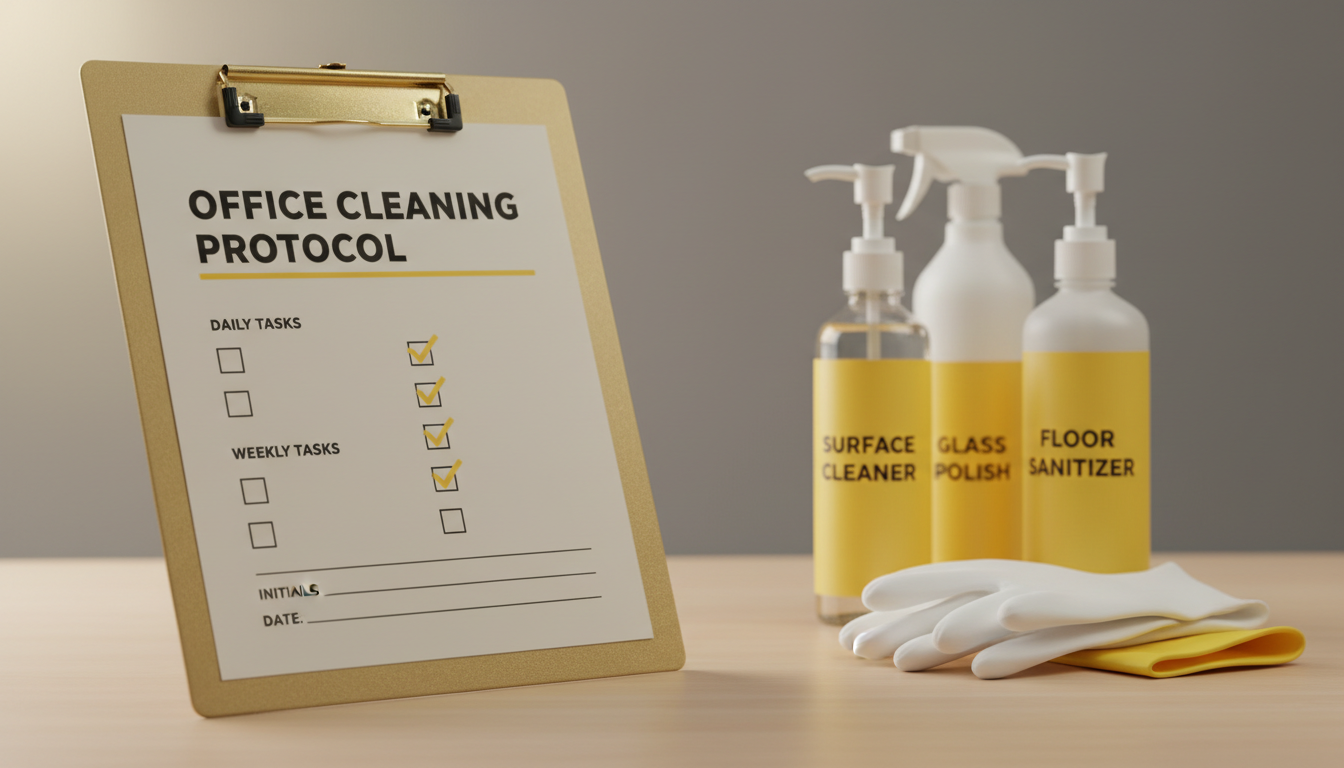
Step 4: Standardize products, tools, and dilution ratios (consistency beats “hack” cleaning) 🧴
You don’t need 30 chemicals. You need the right few, used correctly.
Core cleaning kit for most offices:
- Neutral floor cleaner (safe for tiles)
- Disinfectant (for high-touch points)
- Glass cleaner
- Degreaser (pantry only)
- Microfiber cloths (color-coded)
- Mop + separate restroom mop head
- HEPA vacuum (ideal for dust control)
Color-coding prevents cross-contamination:
| Cloth color | Use |
|---|---|
| Blue | Desks, general surfaces |
| Yellow | Pantry surfaces |
| Red | Restrooms only (never used elsewhere) |
| Green | Glass and mirrors |
Let’s be blunt: using the same rag for pantry counters and restroom sinks is how offices quietly spread germs. 🤢
Step 5: Upgrade your “high-touch hygiene protocol” (the real difference-maker) ✋
If you do only one thing better, do this.
High-touch points to include in every routine:
- Door knobs and push plates
- Elevator buttons (if applicable)
- Light switches
- Pantry appliance handles (ref, microwave)
- Faucet handles
- Soap dispensers
- Shared printers and scanner buttons
- Meeting room remotes and markers
How to do it properly:
- Wipe off visible soil first (dust/grease)
- Apply disinfectant
- Follow the product’s contact time (don’t wipe immediately unless label says so)
- Use a fresh cloth section per cluster of touchpoints
This is where standards become real hygiene—not just “looks clean.”
Step 6: Set restroom standards like a hotel (because everyone notices) 🚻
Restrooms are the fastest way to lose employee trust and client confidence.
Your restroom standard should include:
- Disinfected: toilet seat, flush handle, faucet, door handle, cubicle locks
- Cleaned: mirrors, sink bowl, floor edges, drain area
- Deodorized: neutral smell (not perfume covering odor)
- Stocked: soap, tissue, trash liners
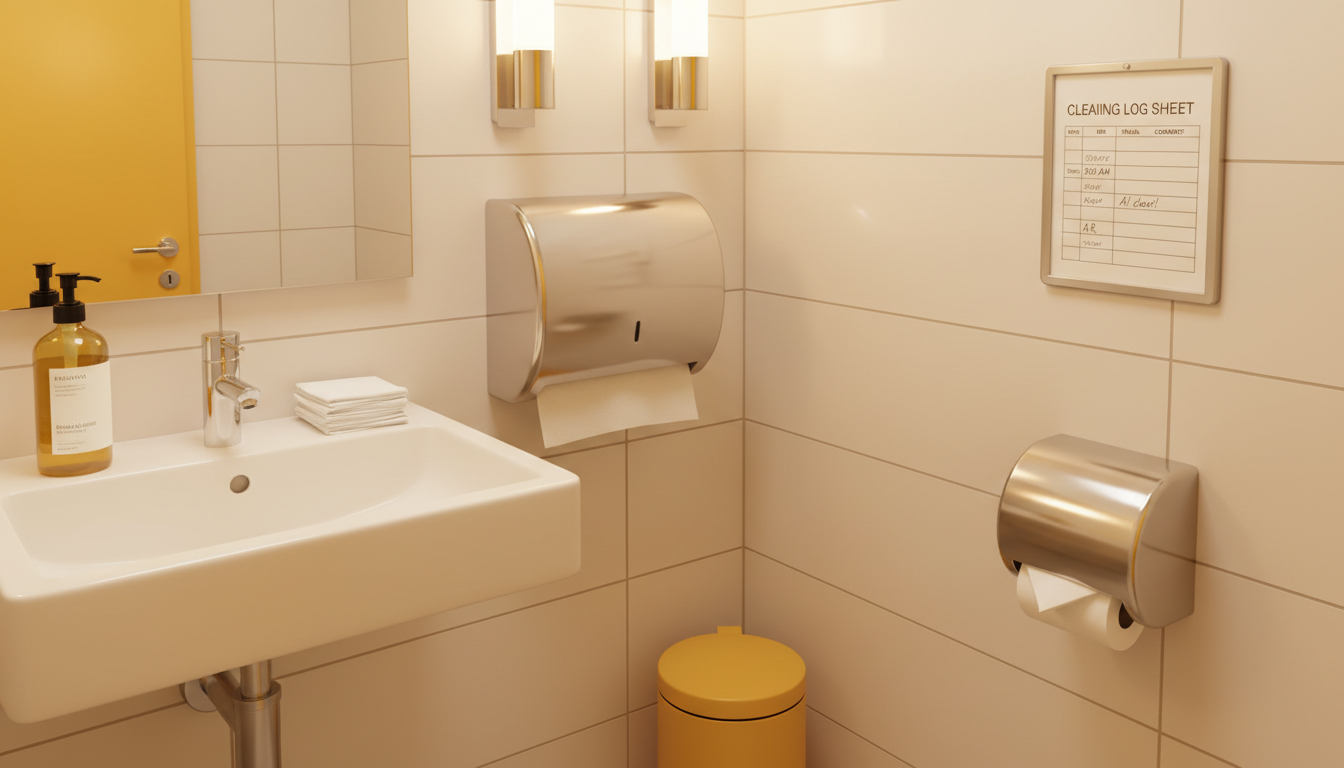
Use a visible restroom log sheet (time + initials). It sounds old-school, but it works because it creates accountability.
Step 7: Improve indoor air quality (dust control is workplace hygiene) 🌬️
Workplace hygiene isn’t just about surfaces. If your air is dusty, employees will feel it—sneezing, itchy eyes, “laging sinisipon” vibes.
Do these in order:
- Control entry dust: put a proper doormat system (outside + inside)
- Vacuum before mopping: don’t just spread fine dust around
- Dust top-down: shelves → desks → floor
- Check aircon vents monthly: visible dust means it’s overdue
- Schedule periodic deep cleaning: especially after renovations or layout changes
If you’ve recently renovated or moved into a new space, you’ll want a serious dust reset. Start with View Full Service Menu to see office-friendly options that minimize downtime.
Step 8: Train your team with a simple “cleaning SOP” (no guesswork) 🎯
Your SOP should be one page per area. Keep it short, visual, and consistent.
Basic SOP format:
- Tools needed
- Chemicals used (and dilution)
- Steps (1–7 max)
- Quality check (what to look for)
- Photo reference (optional)
Example SOP for meeting rooms:
- Remove trash and replace liner
- Dust table edges and chair arms
- Disinfect table surface (respect contact time)
- Wipe whiteboard markers/remote
- Spot-clean glass fingerprints
- Vacuum/sweep floor
- Final check: no streaks, no crumbs, chairs aligned
If you’re outsourcing cleaning, ask providers about training and quality control. This pairs well with what to expect from professional cleaning services in Cagayan de Oro City so you can compare claims vs real standards.
Step 9: Audit weekly using a scorecard (this is how standards stick) 📊
A quick audit catches problems before they become “normal.”
Use a 0–2 scoring system:
- 0 = failed (dirty/unsafe/unfinished)
- 1 = acceptable (minor issues)
- 2 = excellent (meets standard)
Audit these categories:
| Category | What you’re checking | Score (0–2) |
|---|---|---|
| High-touch points | Handles/switches/buttons are disinfected and not sticky | |
| Floors | No grit at entry, corners clean, no sticky spots | |
| Restrooms | No odor, stocked, disinfected, dry floors | |
| Pantry | No residue, sink clear, bins emptied | |
| Desks/common areas | Dust-free, trash cleared, no stains | |
| Air quality cues | No musty smell, vents not visibly dusty |
Set a target: average 1.6+ weekly. If you keep hitting 1.0–1.2, your schedule is too light—or execution is inconsistent.

Workplace hygiene extras that pay off fast in CDO 💡
Add a “clean entry” habit (especially during rainy days) 🌧️
- Put a wet shoe mat near the entrance
- Keep a small mop or floor squeegee ready
- Assign quick entryway checks every 2–3 hours
Don’t ignore soft surfaces 🛋️
Reception chairs, fabric dividers, and carpets hold odor and allergens. If your office has upholstered seating, plan periodic deep cleaning (not just vacuuming).
Set desk hygiene rules (without being annoying)
- Provide disinfecting wipes or spray + microfiber
- Encourage end-of-day desk resets (30 seconds)
- Keep shared equipment rules clear (wipe before/after)
Common mistakes offices in Cagayan de Oro make (and how to fix them) 🚫
| Mistake | What happens | Fix |
|---|---|---|
| Cleaning only after something looks dirty | Dirt becomes “normal,” odors build up | Schedule by frequency, not by mood |
| One cloth for everything | Cross-contamination | Color-code cloths + separate restroom tools |
| Skipping contact time on disinfectants | “Disinfecting” doesn’t disinfect | Follow label dwell time |
| Mopping without vacuuming/sweeping well | Fine dust spreads, floors get sticky | Dry clean first, then wet clean |
| No audit system | Standards slowly drop | Weekly scorecard + monthly review |
When to bring in professional office cleaning (and what to ask) 🧑🔧
If your team is stretched thin, or your office needs deep hygiene work, outsourcing can be the most cost-effective move—especially if you want predictable results.
Ask these questions:
- Do you follow a checklist-based process per area?
- Do you use color-coded cloths and restroom-only tools?
- What’s your approach to high-touch point disinfection?
- How do you handle quality control (supervisor checks, scorecards, client feedback)?
- Can you clean after hours to avoid disruption?
If you want a reliable local partner in CDO, PrimeShineCDO Cleaning Services is built around checklists, punctuality, and fast turnarounds—cleaning that doesn’t interrupt your workday. ✅
Use Explore PrimeShineCDO cleaning services to match the right service to your office needs.
Quick-start: your 7-day office hygiene reset plan 🧩
If you want to implement office cleaning standards fast, do this:
- Day 1: Write your “clean” standards (per area)
- Day 2: Zone your office + list high-touch points
- Day 3: Create daily/weekly/monthly schedule
- Day 4: Standardize tools + color-coded cloth system
- Day 5: Implement restroom log + stock checklist
- Day 6: Launch a weekly audit scorecard
- Day 7: Review gaps and adjust frequency
By the end of the week, you’ll have a real system—not just good intentions.
FAQ: office cleaning standards and workplace hygiene in Cagayan de Oro 🙋♂️🙋♀️
How often should an office in CDO be cleaned?
At minimum: daily cleaning for floors, trash, restrooms, and high-touch points. Weekly detailing for dust, glass, and corners. Monthly/quarterly deep cleaning depending on foot traffic and whether you have carpets or upholstery.
What’s the #1 area to prioritize for workplace hygiene?
High-touch surfaces and restrooms. They’re the fastest routes for germ spread and the most noticeable to staff and visitors.
How do I know if my cleaning is “working”?
Use a weekly audit scorecard. If scores improve and complaints (odor, sticky floors, dusty surfaces) drop, your standards are holding.
If you want help building a consistent, interruption-free office cleaning routine in Cagayan de Oro, contact PrimeShineCDO Cleaning Services and tell us your office size, schedule, and pain points. We’ll recommend a cleaning plan that hits your standards—every time.