Best Entryway Mats And Shoe Storage For Rainy Season In Cagayan De Oro

Rainy season in Cagayan de Oro doesn’t just mean wet sidewalks—it usually means muddy flip-flops, soaked rubber shoes, and that gritty water line that creeps across your tiles. If your entryway isn’t set up for it, you’ll end up cleaning the same mess over and over ☔
This guide covers the best entryway mats and shoe storage for rainy season in Cagayan de Oro (materials, sizes, cleaning)—so you can choose the right pieces once, maintain them easily, and keep your floors safer and drier.
Build a “two-mat” entryway system (outside + inside)
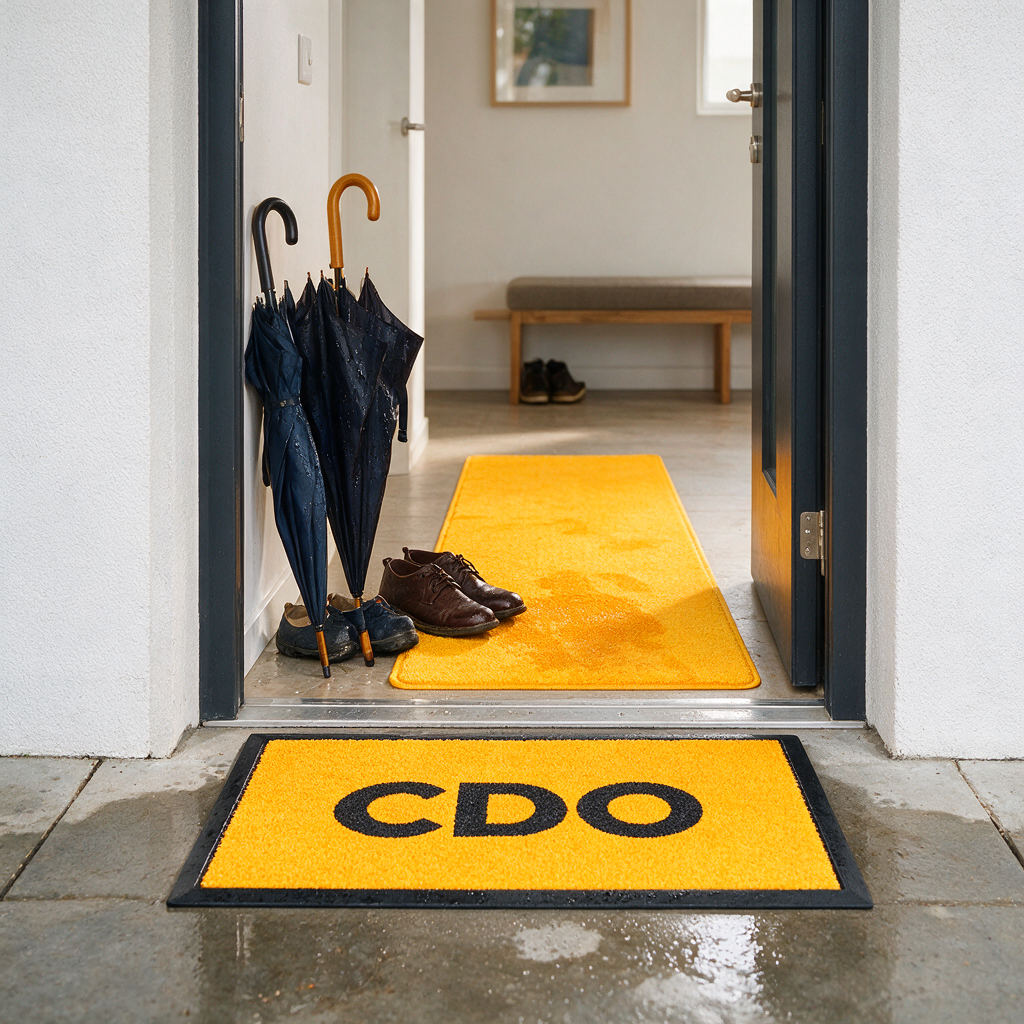
If you only use one mat, you’ll usually get one of two problems: it either scrapes mud but doesn’t absorb water, or it absorbs water but gets overwhelmed by grit.
A simple two-mat setup works best for CDO rain:
- Outside mat (scraper): removes sand, mud, and small stones before they enter.
- Inside mat (absorbent): catches water drip and remaining fine dirt at the threshold.
Decision rule: if you can see footprints after someone wipes once, you need a better scraper outside. If you still get puddles inside, you need more absorbency or a longer inside mat.
Best mat materials for CDO rainy season (pros, cons, and where they work)
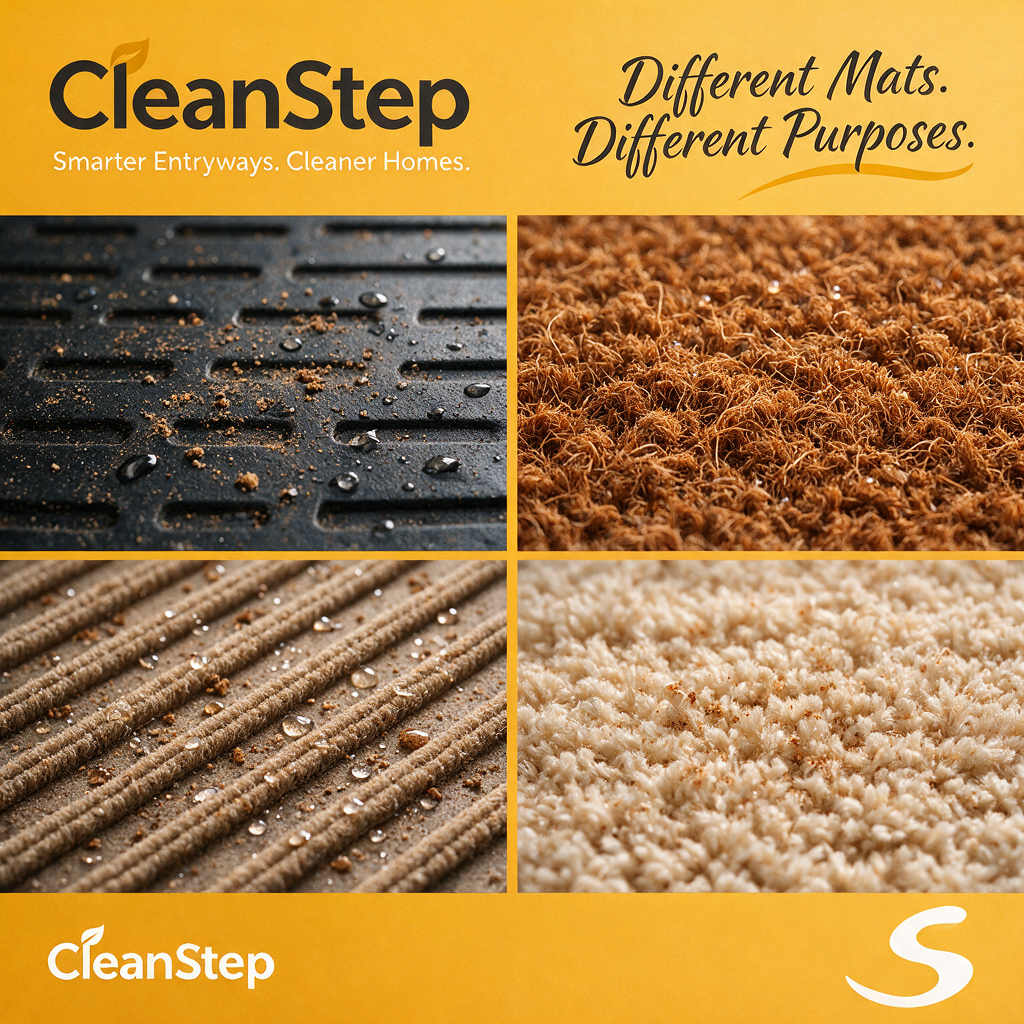
In Cagayan de Oro, the challenge isn’t just rain—it’s rain + humidity. That means you want mats that don’t stay damp for days (amoy kulob) and don’t shed fibers into your entryway.
Material comparison (quick buying guide)
| Material | Best for | What you’ll like | Watch-outs in rainy CDO | Cleaning difficulty |
|---|---|---|---|---|
| Rubber (all-rubber / molded) | Outdoor doorstep, service entrances | Excellent grip, doesn’t soak water, easy rinse | Can get slippery on top if it has a smooth surface; choose textured | Easy 🧽 |
| Coir (coconut fiber) | Covered outdoor areas | Scrapes dirt well; classic look | Stays wet longer; can shed; can grow musty if always damp | Medium |
| Polypropylene (synthetic woven) | Indoor entry, condos | Dries faster than fabric; durable; resists mildew better | Cheap ones curl at edges; pick heavier backing | Easy–Medium |
| Microfiber / absorbent fabric | Indoor “last stop” for water | Best at absorbing drips; soft underfoot | Needs frequent washing/drying; can smell if neglected | Medium |
| Carpet-style mats | Indoor only, higher traffic | Traps fine dust well | If it stays damp, it can hold odor; avoid thick pile in humid spots | Medium–Hard |
| Foam/diatomite-style bath stones | Small indoor areas | Absorbs quickly | Can stain with muddy water; brittle if dropped; not great for heavy grit | Medium |
Practical picks that work well here
- For outdoors: go with textured rubber or a rubber-backed scraper.
- For indoors: go with a low-pile polypropylene mat or a washable microfiber mat.
If your doorway gets direct rain, skip thick coir or thick carpet mats unless you’re willing to dry them often.
Sizes that actually work (so people don’t step around the mat)
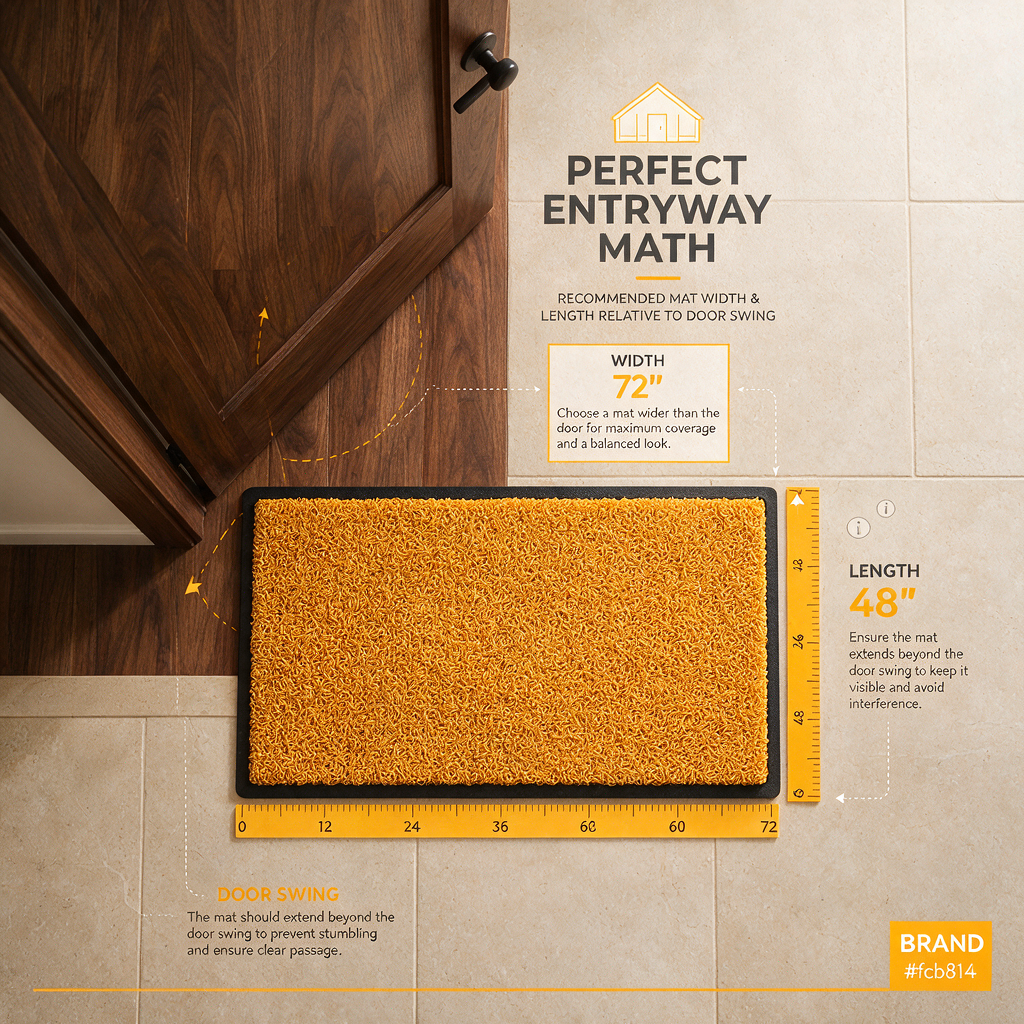
A mat is only effective if it’s big enough that people naturally step on it. Too small and everyone steps past it—especially when they’re carrying groceries or holding an umbrella.
Entry mat sizing guide
| Entry type | Outside mat minimum | Inside mat minimum | Why it works |
|---|---|---|---|
| Condo/unit door (narrow hallway) | ~45–60 cm wide | ~45–60 cm wide, 90–120 cm long | Gives you 2 steps to dry without blocking hallway |
| Typical house main door | ~60–90 cm wide | 60–90 cm wide, 120–180 cm long | Enough length for 2–3 steps (better drip control) |
| Office/shop entry (higher traffic) | 90 cm+ wide | 90 cm+ wide, 180 cm+ long | Handles repeated foot traffic and reduces slip risk |
Simple measuring rule:
- Width: aim for at least the door width, or slightly wider.
- Length (inside): aim for 2–3 natural steps from the door.
Also check clearance: if your door drags on thicker mats, switch to a low-profile indoor mat.
Cleaning and maintenance (no amoy-kulob, no mildew)
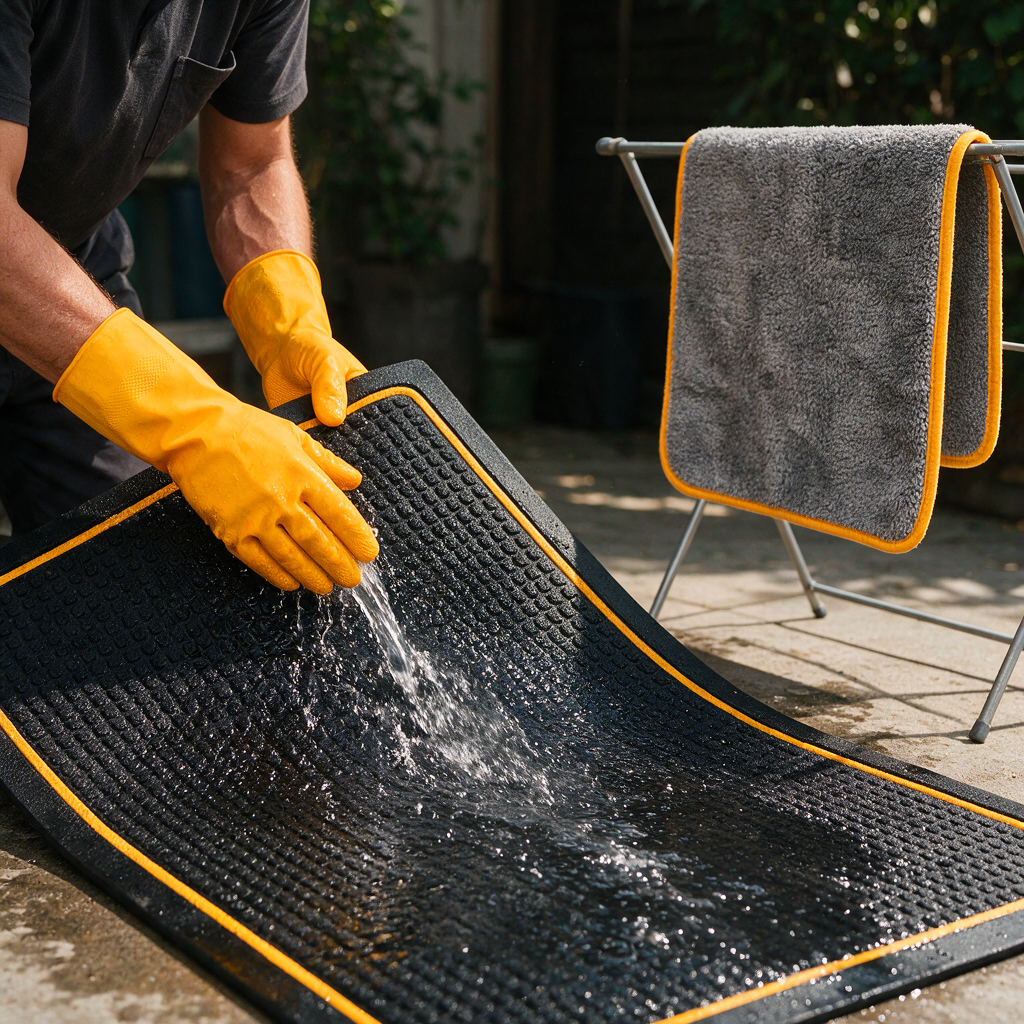
Most rainy-season mat problems come from one thing: mats that stay damp. In CDO humidity, “air-dry” can still mean “still wet tomorrow,” so you want a routine that includes wringing, sunning (when possible), and good airflow.
A realistic rainy-season routine
- Daily (during frequent rains):Shake or tap mats outside to remove grit.Quick wipe the surrounding floor to stop dirt from spreading.
- 2–3x per week:Rinse the outdoor mat.Wash or hose the indoor mat if it’s holding odor.
- Weekly (or after muddy days):Deep clean both mats and fully dry them.
How to clean by material
- Rubber mats:Hose down, scrub with mild dish soap, rinse well.Dry upright so water drains off (don’t leave flat on wet ground).
- Polypropylene mats:Vacuum/shake first.Hose and scrub lightly; avoid aggressive brushing that frays loops.Dry in shade with airflow; rotate to speed drying.
- Microfiber/washable fabric mats:Wash with mild detergent.Skip heavy fabric softener (it can reduce absorbency).Dry completely before placing back—damp fabric is where odor starts.
- Coir mats:Shake/vacuum often.Avoid soaking too long (it holds water).Sun-dry when you can; replace if it stays musty.
Odor control that won’t damage your floors
- Let shoes drip on a tray (not directly onto tiles).
- Use ventilation: even a small fan pointed at the mat area helps drying.
- If your entryway floor gets sticky or dull from repeated wet dirt, it may be residue buildup rather than “just dirt.” This guide helps you tell the difference: remove floor wax buildup and restore shine on vinyl and tile floors.
If you keep getting slippery floors near the door, treat it as a safety issue—not just cleaning. Add length to the indoor mat and reduce pooling.
Shoe storage that works in wet weather (and doesn’t trap smell)
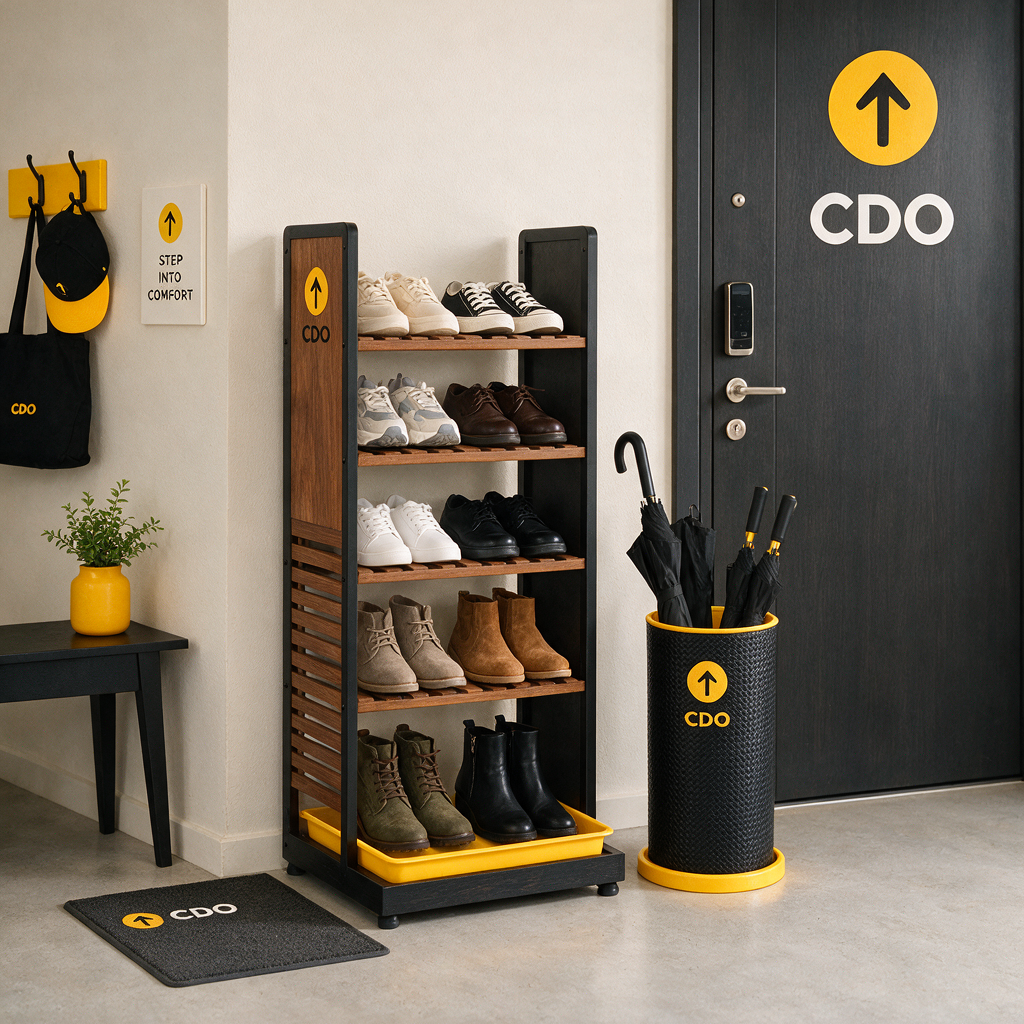
Wet shoes stored in a closed, unventilated cabinet will smell faster in CDO weather. You want storage that contains drips but still allows air movement 👟.
Shoe storage options compared
| Storage type | Best for | Pros | Cons | Rainy-season must-have |
|---|---|---|---|---|
| Open metal rack | Small spaces, quick drying | Airy, dries fast, easy to wipe | Looks cluttered if overfilled | Add a drip tray underneath |
| Plastic rack/cabinet (vented) | Families, kid shoes | Water-resistant, easy to clean | Needs vents or it traps odor | Choose slotted doors or vents |
| Wood cabinet | Style-forward entryways | Hides clutter | Can warp/mold if damp shoes go in | Only use with trays + airflow |
| Shoe bench with storage | Putting on shoes comfortably | Practical, neat | Cushions/fabric tops can absorb damp | Prefer wipeable seat or removable cover |
| Stackable shoe boxes | Collections, limited floor space | Organized | Poor airflow | Only for fully dry shoes |
What to look for (quick checklist)
- A removable drip tray (or a boot tray) to catch water and mud.
- Ventilation: open sides, slats, or vent holes.
- Easy-to-wipe surfaces: plastic, powder-coated metal, or sealed wood.
- Enough capacity: if shoes stack on each other, nothing dries.
Decision rule: if shoes still feel damp the next day, switch to a more open rack or add airflow.
A simple rainy-season entryway layout (small condo to bigger homes)
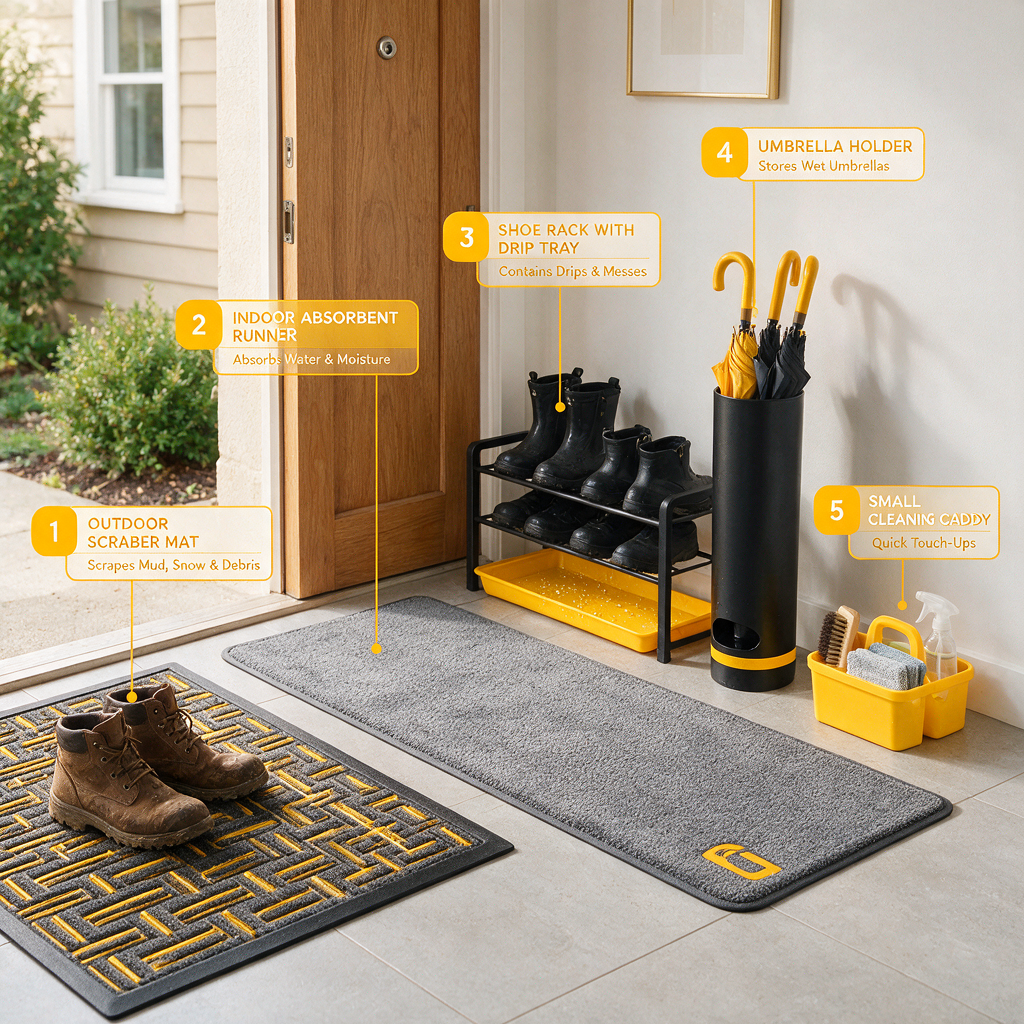
You don’t need a big foyer. You just need the right order so dirt and water get stopped in layers.
- Zone 1 (outside): scraper mat for grit
- Zone 2 (inside threshold): absorbent mat/runner for drips
- Zone 3 (side wall/corner): shoe rack + drip tray + umbrella stand
- Zone 4 (optional): small caddy with a microfiber cloth and mild cleaner for quick wipe-downs
If your door opens inward and space is tight, prioritize a longer inside runner over a thick mat that blocks the swing.
Common rainy-season mistakes (and what to do instead)
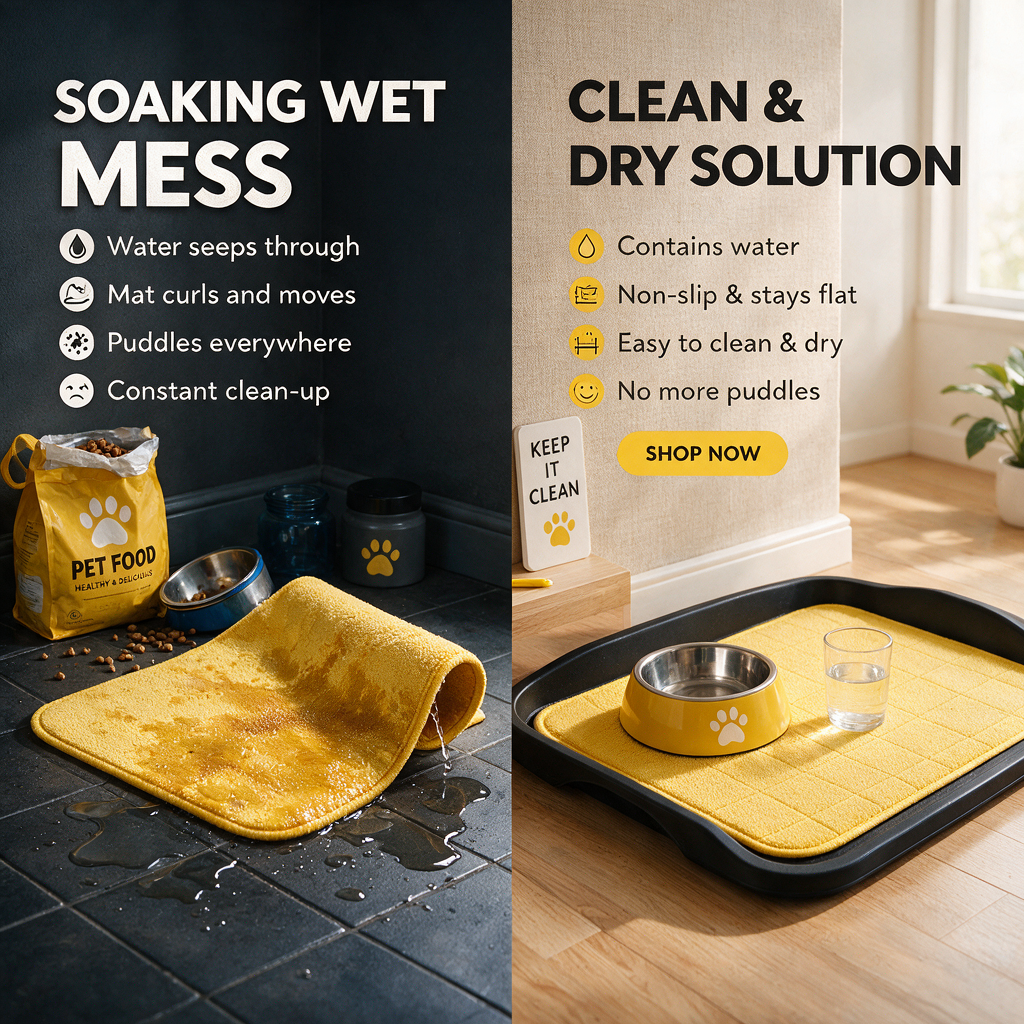
- Mistake: buying a mat for looks, not grip.Do instead: choose non-slip backing and a textured surface.
- Mistake: using a thick mat indoors that never fully dries.Do instead: use a low-pile, quick-dry mat and wash it often.
- Mistake: storing wet shoes inside closed cabinets.Do instead: let shoes drip and air out first, then store.
- Mistake: letting sand/grit stay on the mat.Do instead: shake it out frequently—grit acts like sandpaper on floors.
If your entry tiles are getting scratched, the culprit is usually trapped grit, not the mop.
When it’s worth booking a professional clean
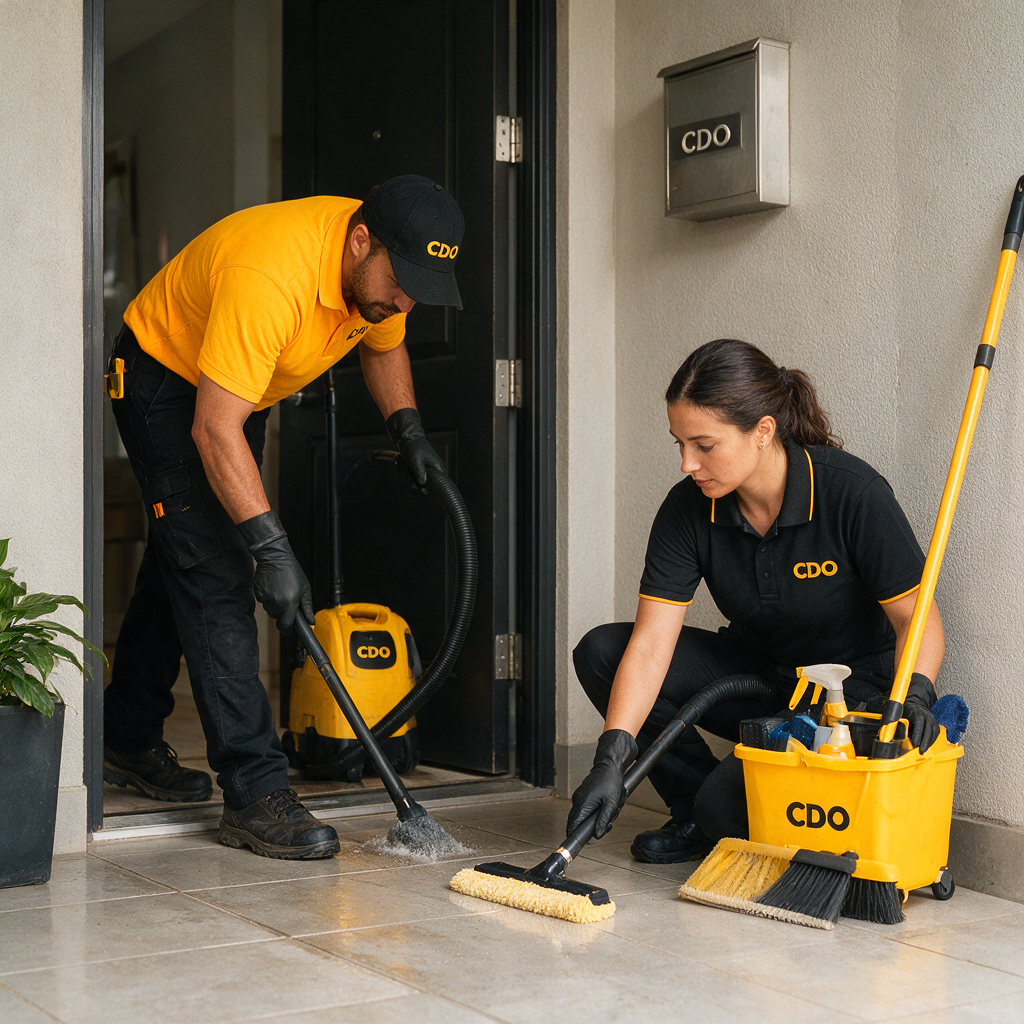
Mats and shoe storage reduce mess, but rainy season still pushes dirt into corners, grout lines, and fabrics. Consider a professional clean if:
- Your entryway floor feels sticky or dull even after mopping
- Your carpet/rug near the door holds odor after repeated wet days
- Your sofa gets “rainy day” dampness from people sitting down in wet clothes (common in busy households)
If you want your whole space reset after weeks of rainy foot traffic, you can check what fits your home or office here: explore PrimeShineCDO cleaning services. For questions about scheduling or scope, use the quickest route here: contact PrimeShineCDO Cleaning Services.
Quick FAQs (CDO rainy season edition) 🌧️
How many mats do you really need?
Two is the sweet spot: one outside for scraping, one inside for absorbing. If you have a long hallway, add a runner inside so drips don’t reach your living area.
Is coir okay in humid weather?
It can be, but it’s best in a covered area where it can dry. If it stays wet most days, it tends to smell and shed faster.
What’s better for condos: rubber or fabric?
Use rubber outside if allowed (or right at the threshold), then a washable low-profile indoor mat. Condos often have limited airflow, so prioritize mats that dry quickly.
How do you prevent slippery tiles by the door?
Use a longer absorbent mat (2–3 steps), keep the surface grit-free, and don’t let water pool under a mat. If the mat slides, change to a stronger non-slip backing.
A practical rainy-season shopping list (keep it simple)
- 1 textured rubber scraper mat for outside
- 1 quick-dry indoor runner (low-pile polypropylene or washable microfiber)
- 1 shoe rack with a drip tray (ventilated)
- 1 umbrella stand or wall hook
If you set those up and stick to a basic rinse/wash routine, your entryway stays controlled—even on the wettest CDO weeks 🏠