Carpet Cleaning Methods Compared: Steam Vs Shampoo Vs Dry In CDO Homes & Offices
carpet cleaning methods compared (steam vs shampoo vs dry): which works best for CDO homes and offices—beat kulob smells, dust, and spills with a clear guide to pick the right method.
Feb 15, 2026
Need a spotless space without interruptions?
PrimeShineCDO Cleaning Services uses punctual teams, clear checklists, and efficient cleaning methods for residential cleaning, sofa cleaning, carpet cleaning, and post-construction cleaning.
Contact UsCarpets in Cagayan de Oro (CDO) take a beating—rainy-season humidity, street dust, beach sand, office foot traffic, and the occasional coffee spill. And once your carpet starts smelling “kulob” 😅, vacuuming alone won’t save it.
This guide compares the three most common methods—steam (hot water extraction), shampoo, and dry cleaning—then walks you through exact steps to choose the best one for your CDO home or office.
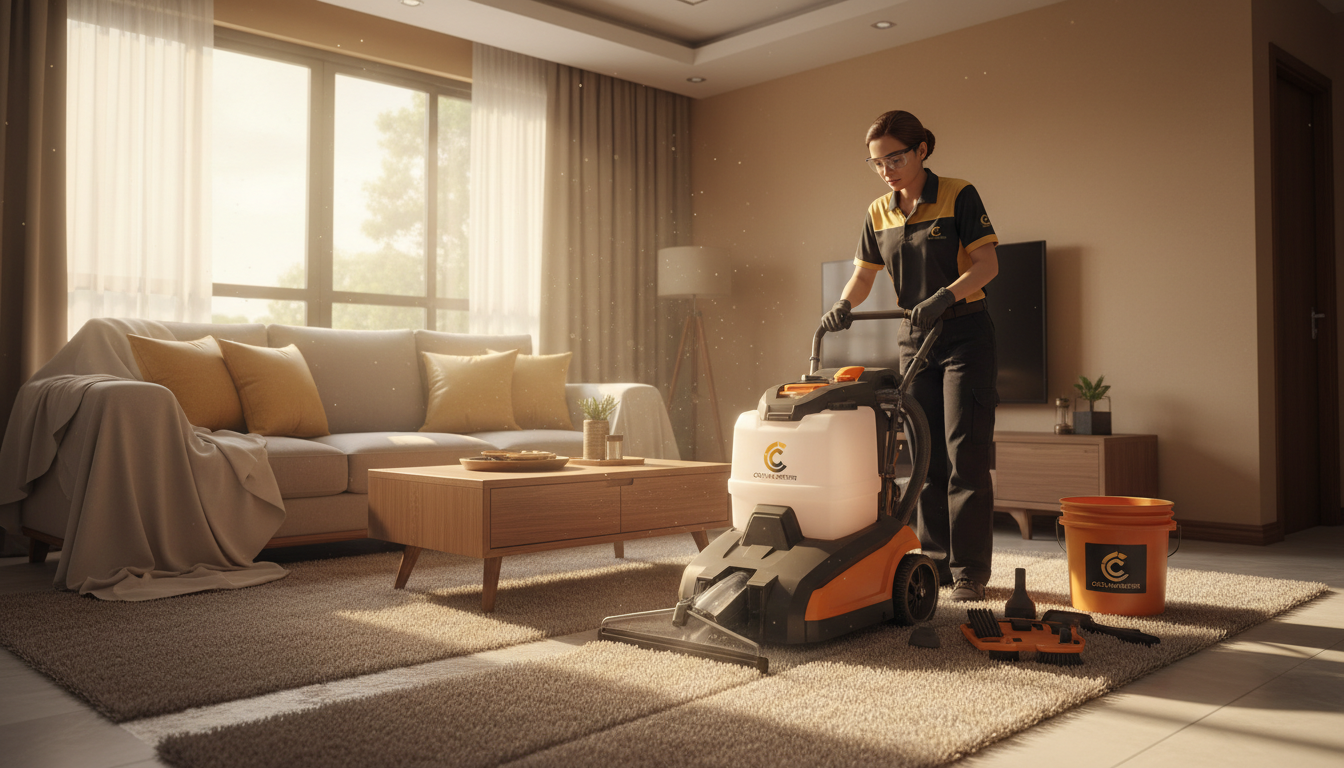
Quick answer: which carpet cleaning method works best in CDO? ✅
For most CDO homes and offices, steam cleaning (hot water extraction) works best overall because it:
- lifts deep dirt + allergens
- removes odors better
- avoids sticky residue when done properly
- restores carpet pile and appearance
But—let’s be honest—“best” depends on your carpet type, how fast you need it to dry, and how dirty it is. Dry cleaning wins for speed. Shampoo can work for certain situations but has the biggest risk of residue and re-soiling.
Steam vs shampoo vs dry carpet cleaning (CDO comparison table)
Because you’re choosing between methods, here’s a straight comparison you can scan fast 👇
| Method | How it works | Best for (CDO use cases) | Dry time (typical) | Pros | Cons | Overall verdict |
|---|---|---|---|---|---|---|
| Steam / Hot Water Extraction | Hot water + solution injected, then powerful extraction removes soil | Deep cleaning homes, offices with heavy foot traffic, allergies, pet odors | 4–12 hrs (can be longer in humid/rainy days) | Deepest clean, best odor removal, strong hygiene results | Needs drying time; poor technique can over-wet | Best all-around 🥇 |
| Carpet Shampoo | Foam/detergent scrubbed into fibers, then vacuumed/extracted | Heavily soiled spots, older carpets needing “cosmetic lift” | 6–24 hrs | Good visual improvement, strong agitation | Residue risk; may re-soil faster; can leave smell if not rinsed well | Use selectively ⚠️ |
| Dry / Low-moisture cleaning | Absorbent compound or encapsulation crystals bind soil; vacuum removes | Offices needing fast turnaround, areas that can’t be wet, routine maintenance | 30 min–2 hrs | Fastest dry time, minimal downtime | Not as deep for oils/odors; requires thorough vacuuming | Best for speed 🥈 |
The takeaway is clear: Steam for deep clean, dry for fast operations, shampoo only when you know why you’re using it.
Why CDO conditions change the “best method” 🌀
CDO isn’t just “warm”—it’s humid, and that affects carpet drying and odor risk.
Common local realities:
- Rainy days slow drying → over-wet carpets can smell musty
- Dust + soot (roads, construction, traffic) → carpets load up faster
- Mold risk rises when carpets stay damp too long
- Aircon offices can dry faster if airflow is managed right
So your method choice isn’t just about cleaning power—it’s also about moisture control and turnaround time.
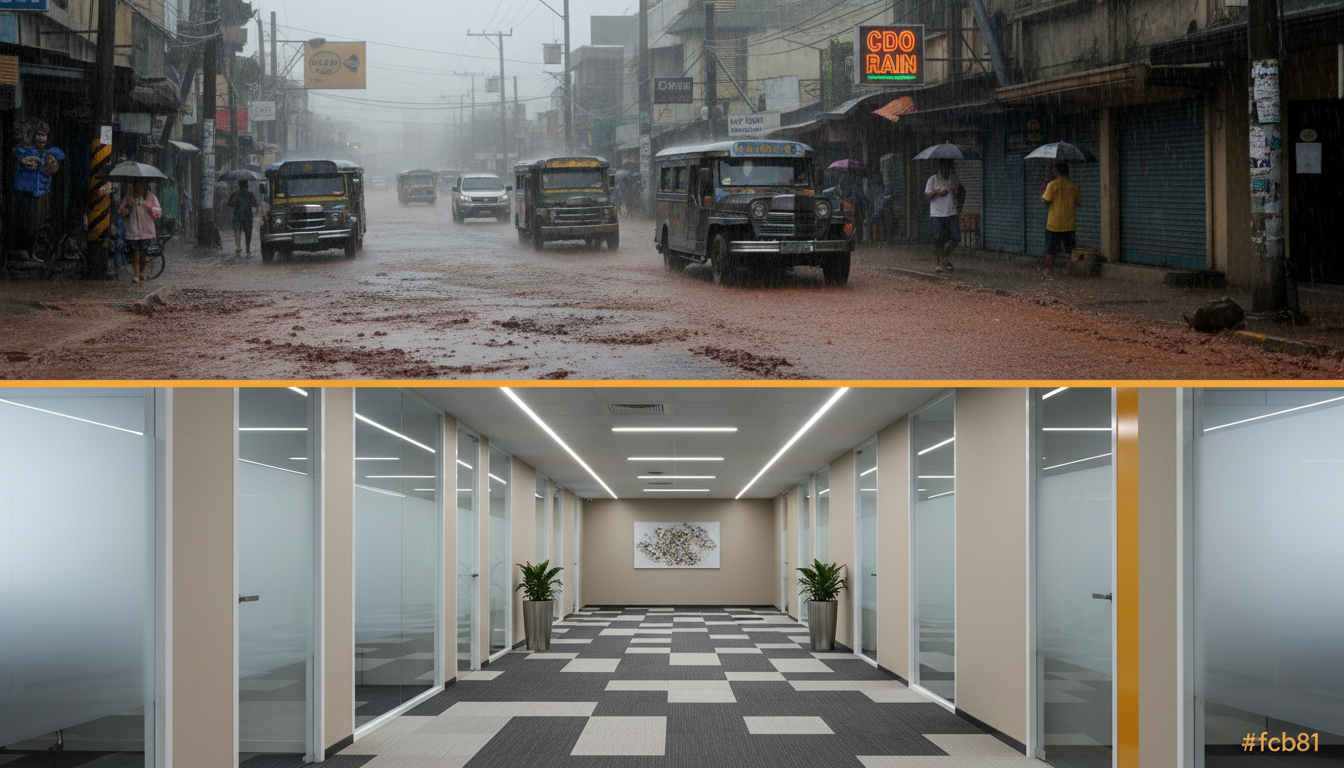
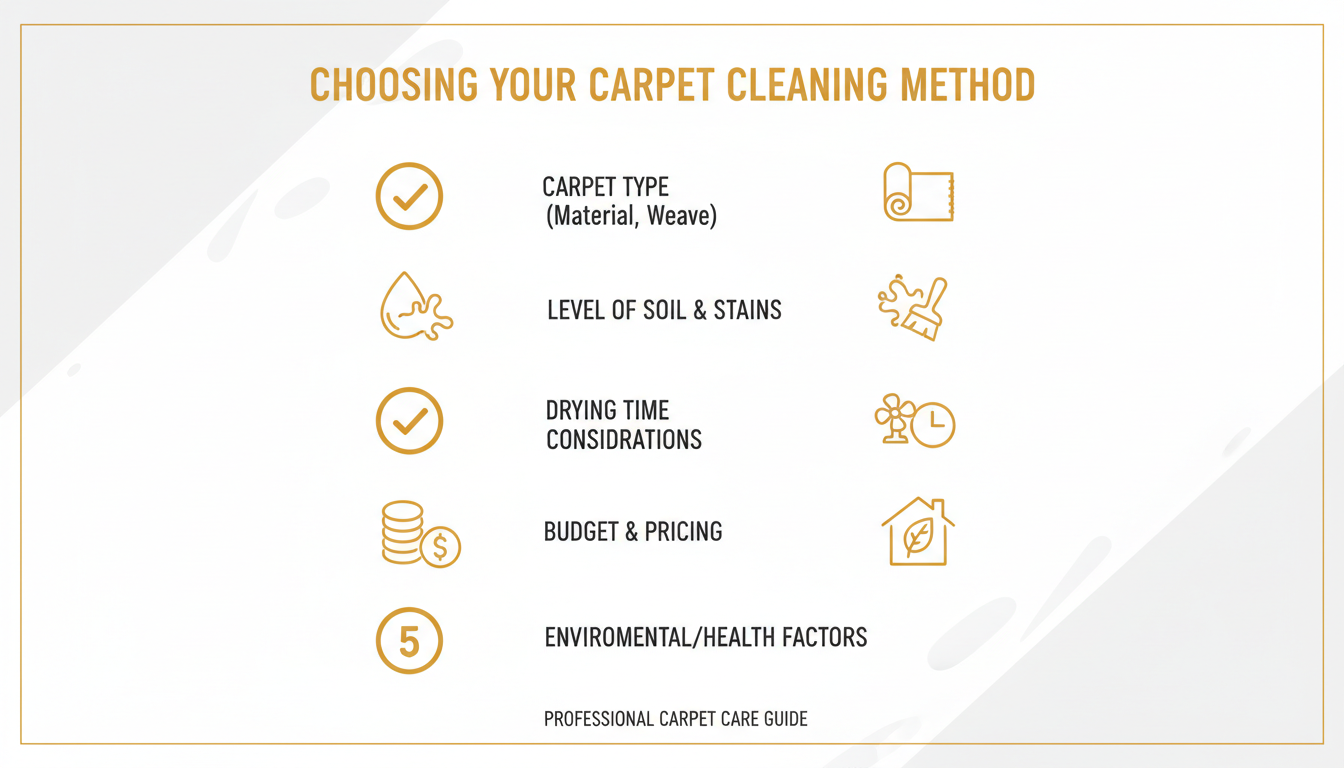
Step-by-step: choose the right carpet cleaning method for your space (CDO decision guide)
Step 1: Identify your carpet type (this determines what’s safe)
Check your carpet label or ask your installer. If you’re unsure, use these practical cues:
- Wall-to-wall broadloom (typical in homes, bedrooms) → usually fine for steam, sometimes for shampoo
- Carpet tiles (common in offices) → often best with dry/low-moisture or controlled steam
- Wool or natural fibers → needs extra caution; avoid harsh detergents and over-wetting
- Thin commercial loop pile → dries faster; responds well to low-moisture methods
If you want a deeper explanation of how fibers react to moisture and chemicals, read this upholstery and fabric-care guide.
Step 2: Match the method to your goal (not your guess)
Ask yourself what you actually need:
- If your goal is hygiene + allergens + odor removal → choose steam
- If your goal is “looks cleaner fast” for a meeting tomorrow → choose dry
- If your goal is lifting heavy soil in specific lanes → steam first; shampoo only if required for agitation
Step 3: Consider downtime and drying reality (CDO humidity check)
Before you book or DIY, plan the drying window:
- Home with open windows + fans available → steam is usually fine ✅
- Condo with limited airflow + rainy week → dry cleaning may be safer ✅
- Office that can’t stop operations → dry cleaning wins ✅
Step 4: Check the “soil type” (this is the hidden deciding factor)
Different dirt behaves differently:
- Dry soil (dust/sand) → dry method works well if vacuuming is thorough
- Oily soil (skin oils, food, kitchen-adjacent areas) → steam works best
- Sticky spills (coffee, juice, sauces) → steam extraction is best
- Pet odor/urine → steam + proper deodorizing steps; dry cleaning won’t fully solve it
Step 5: Choose your schedule (CDO-friendly frequency)
- Homes with kids/pets: every 3–6 months
- Offices with daily foot traffic: every 1–3 months
- Low-traffic rooms: every 6–12 months
For a bigger picture on why carpets trap dirt and allergens, see Everything You Need to Know About Carpet Cleaning (And Why It Matters).
Steam cleaning (hot water extraction): best for deep cleaning CDO homes & busy offices 💧
Steam cleaning isn’t just “hot steam.” Most professional services use hot water extraction: a solution is applied, agitated, then powerfully extracted along with soil.
When steam works best
- High-traffic hallways and living rooms
- Office reception and walkways
- Allergy-sensitive homes
- Musty odor or “kulob” smell
- After events, holidays, or heavy rain season
Step-by-step: how to get the best results with steam cleaning
- Vacuum slowly (two directions)
This removes dry soil so the extractor isn’t turning dust into mud. - Pre-treat stains and traffic lanes
Focus on entry points, under desks, and sofa-adjacent areas. - Use controlled heat + proper dilution
Too much detergent = residue. Residue = faster re-soiling. This is the big one. - Agitate (light brush) where needed
Especially for textured carpets and embedded sand. - Extract with overlapping passes
Do one wet pass, then 1–2 dry passes to pull moisture out. - Speed-dry immediately
Turn on AC, open ventilation (if weather allows), and run fans for 4–12 hours. - Groom the pile (optional but worth it)
Helps even drying and improves appearance.
Common mistakes (that cause smell and slow drying)
- Over-wetting the carpet
- Skipping dry passes
- Closing the room with no airflow
- Using too much fragrance to “cover” odor 🤦
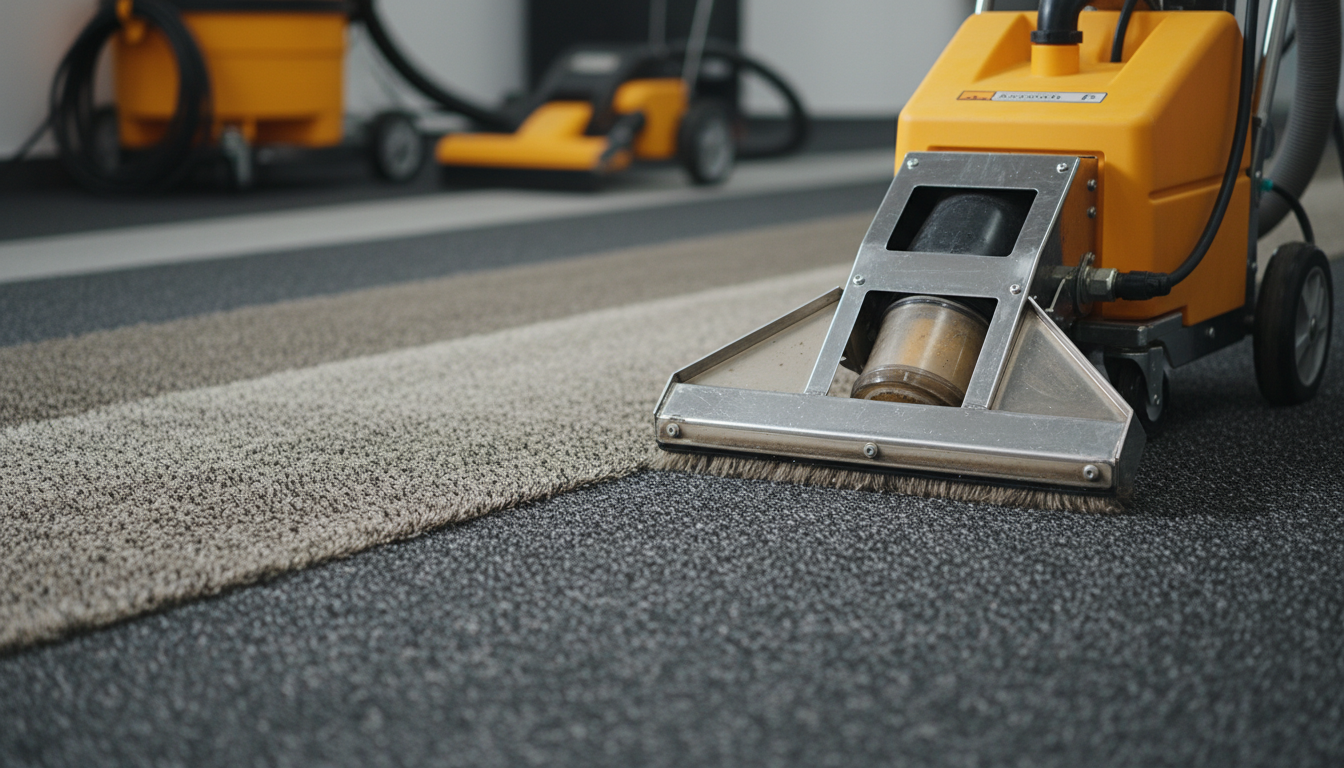
Carpet shampoo: when it helps—and when it backfires 🧴
Shampooing uses foam or detergent and mechanical scrubbing. It can make carpets look brighter fast, but it’s also the most likely to cause sticky residue if not rinsed/extracted properly.
When shampoo is a good choice
- Older carpets that need extra agitation
- Very visible traffic lanes (especially where dirt is packed)
- Situations where you’ll follow with extraction/rinse
Step-by-step: safer shampoo approach (to avoid residue)
- Vacuum thoroughly first
- Spot test a hidden area (colorfastness)
- Use minimal shampoo (follow dilution exactly)
- Scrub only where needed (traffic lanes, not everywhere)
- Rinse/extract after shampooing
This is what most DIY jobs skip—and why carpets get dirty again quickly. - Dry fast with fans + airflow
Red flags to avoid shampoo
- You can’t rinse/extract afterward
- Humidity is high and airflow is poor
- The carpet already has odor issues (shampoo can trap it)
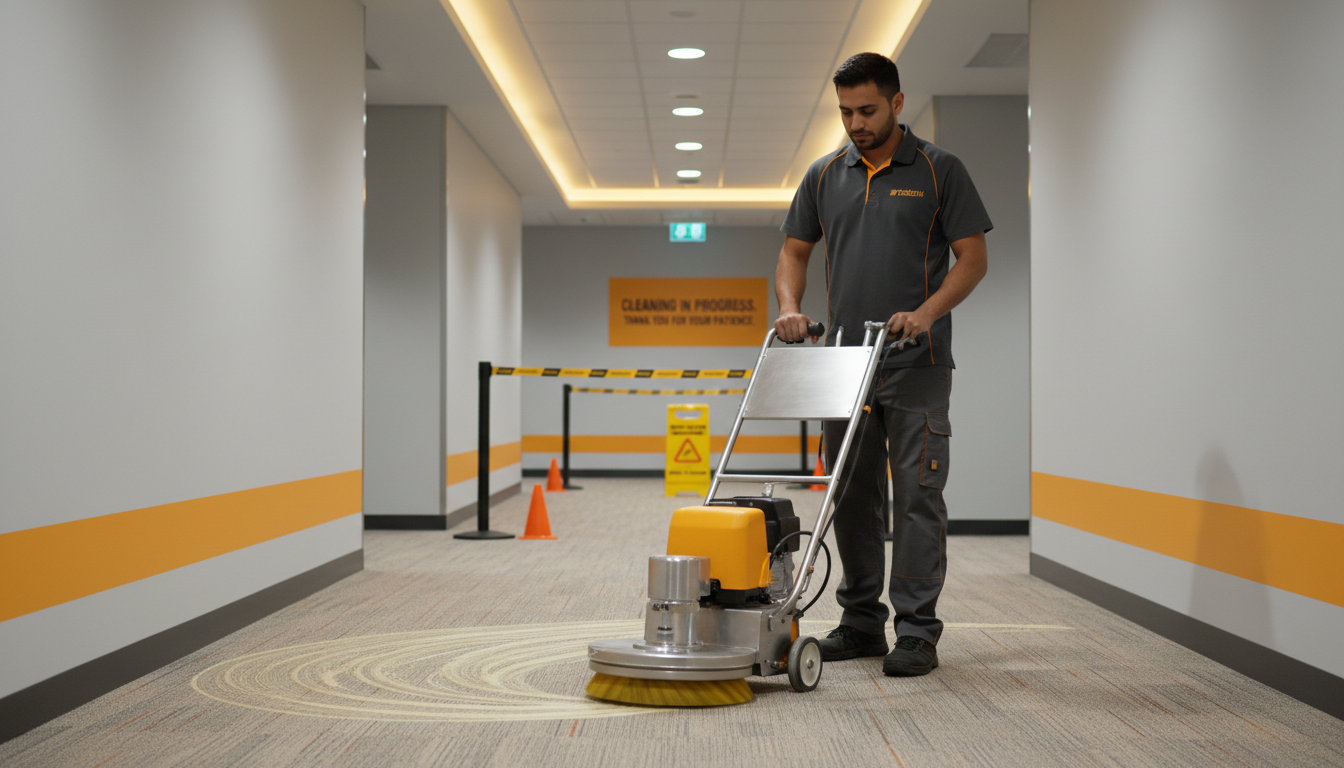
Dry carpet cleaning: best for offices that can’t shut down ⏱️
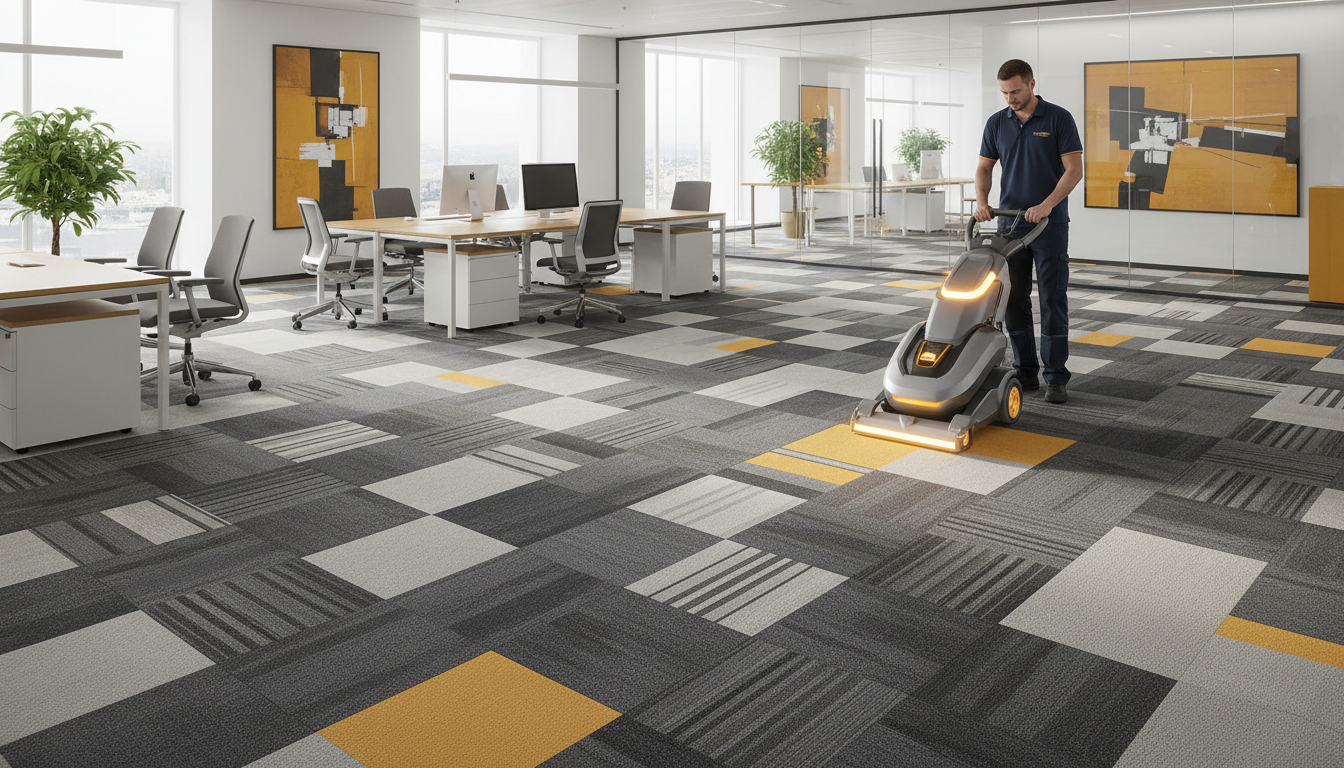
Dry cleaning uses a low-moisture compound or encapsulation process that binds dirt so it can be vacuumed out. It’s popular for commercial spaces because it’s fast.
When dry cleaning is best
- Offices with clients coming in all day
- Carpet tiles in meeting rooms and hallways
- Places where drying time is a deal-breaker
- Routine maintenance between deep cleans
Step-by-step: how to do dry cleaning correctly
- Pre-vacuum thoroughly
If you skip this, you’re wasting the method. - Apply compound/encapsulation evenly
Don’t dump it in one spot. - Brush/agitate to help it bind soil
- Let it dwell (follow product time)
- Vacuum slowly and repeatedly
This is where the dirt actually leaves.
Limitations you should know
- Won’t remove deep oily residue as effectively as steam
- Won’t fully solve strong odors (pets, mildew)
- Depends heavily on high-quality vacuuming
Which method should you choose? (CDO home & office scenarios)
| Scenario | Most practical choice | Why |
|---|---|---|
| Condo bedroom carpet smells slightly musty | Steam (careful drying) | Removes odor sources better than dry methods |
| Office carpet tiles, open daily | Dry cleaning | Minimal downtime; quick return-to-use |
| Home with kids + visible stains | Steam | Best stain + hygiene combo |
| After renovation dust (post-construction) | Steam + pre-vac + filtration | Fine dust embeds deep; extraction helps remove it |
| Old carpet with heavy traffic lanes | Steam first; selective shampoo if needed | Deep extraction + agitation where required |
If you’re dealing with renovation debris and fine dust, pair your carpet plan with proper site cleanup—this guide on post-construction cleaning in Cagayan de Oro lays out what “fully finished” really looks like.
Step-by-step: a practical CDO carpet cleaning routine (that actually keeps carpets clean)
Use this simple system to reduce deep-clean frequency and keep carpets looking sharp:
Weekly (homes) / 2–3x weekly (offices)
- Vacuum slow (two passes in traffic lanes)
- Address fresh spots immediately
Blot—don’t rub. Use cold water first.
Monthly
- Edge vacuuming and corners
Dust builds where vacuums usually skip. - Deodorize lightly (only if needed)
Avoid heavy powders that add residue.
Quarterly (or as needed)
- Choose steam or dry cleaning based on downtime
- Protect high-traffic zones with mats and entryway rules
FAQs (CDO-specific)
Is steam cleaning safe for carpets in humid weather?
Yes—if drying is managed. The risk isn’t steam; it’s leaving carpet damp too long. Use fans, AC, and dry passes.
Why does my carpet get dirty again after shampooing?
Usually residue. Leftover detergent acts like a magnet for dirt. Shampoo should be rinsed/extracted properly.
Can dry cleaning replace steam cleaning permanently?
For many offices, dry cleaning works great as maintenance, but most spaces still benefit from periodic steam cleaning for deep oils and odor control.
Ready for a carpet refresh in CDO? ✨
If you want the method matched to your carpet type, traffic level, and drying conditions—PrimeShineCDO can help you choose the right approach and get it done with minimal disruption.
- Explore options on PrimeShineCDO’s cleaning services page
- Or contact PrimeShineCDO to request a quote and schedule
Malinis. Maasahan. Pang‑CDO.