How to Prevent Slip Hazards From Wet Floors During Cagayan de Oro Rainy Season (Mats, Signage, Drying Methods)
Learn how to prevent slip hazards from wet floors during Cagayan de Oro rainy season (mats, signage, drying methods) to stop water at the door and dry safely before falls happen.
Oct 26, 2026
Need a spotless space without interruptions?
PrimeShineCDO Cleaning Services uses punctual teams, clear checklists, and efficient cleaning methods for residential cleaning, sofa cleaning, carpet cleaning, and post-construction cleaning.
Contact UsRainy season in Cagayan de Oro changes how your floors behave. A few minutes of foot traffic can turn an entryway, hallway, or lobby into a slick path—especially on polished tile, vinyl, sealed concrete, or stone.
This guide explains how to prevent slip hazards from wet floors during Cagayan de Oro rainy season (mats, signage, drying methods) using a simple, repeatable approach. Whether you manage an office, condo common area, shop, or busy home, the goal is the same: stop water at the door, warn people early, and dry fast without leaving slippery residue behind.
Why wet floors get dangerous fast during CDO rainy days
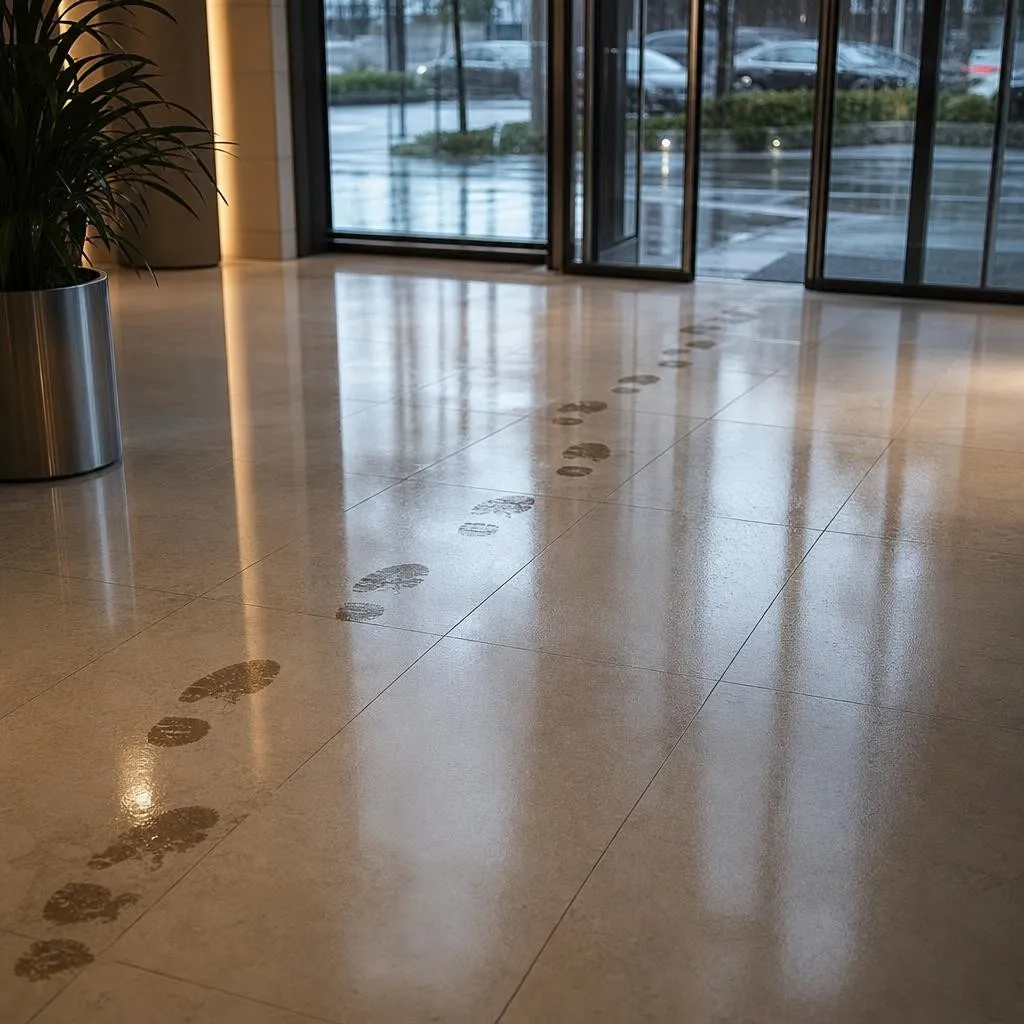
Rain brings three common problems that increase slip risk:
- Water gets tracked inside faster than you can mop, especially during rush times (school drop-offs, lunch, shift changes).
- Fine grit mixes with water (road dust, sand, soil). This acts like tiny ball bearings under shoes.
- Some cleaning products leave residue. If a floor is “clean” but feels slick when damp, residue is often the reason.
A safe rainy-season setup doesn’t rely on constant mopping alone. You need a system that reduces how much water reaches the walking surface—and a quick response when it does.
The 3-layer system: mats + signage + drying methods
Think of rainy-season floor safety as three layers working together:
- Mats to capture water and grit before it spreads
- Signage to slow people down and redirect traffic
- Drying methods to remove water quickly and completely (not just “push it around”)
If one layer is weak, the other two get overwhelmed.
Layer 1: Mats that actually stop water (placement, length, and maintenance)
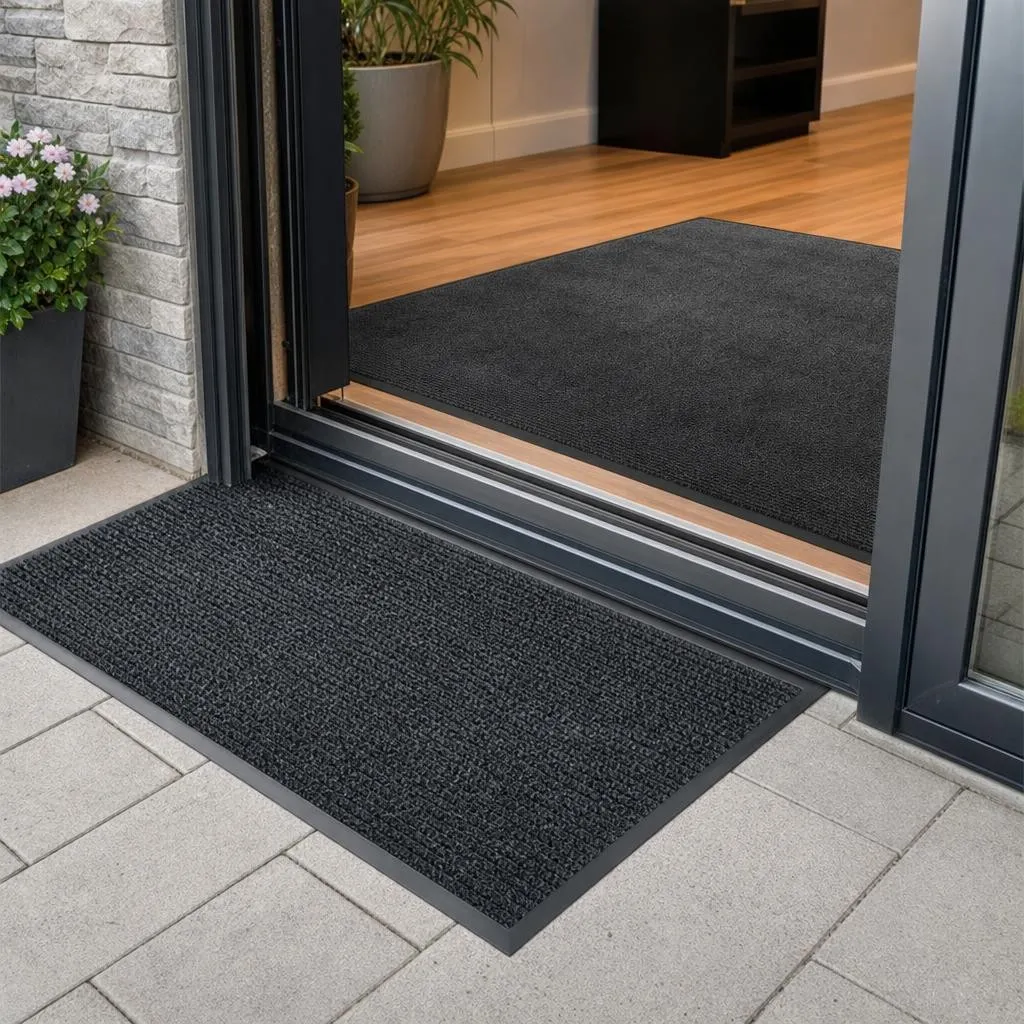
Most slip issues start at the entrance. Your goal is to give shoes enough distance to shed water.
How to set up a high-capture mat zone
- Use a 2-zone setup whenever possible:Outside (or just inside the door): a scraper mat to knock off gritInside: an absorbent wiper mat to pull water off soles
- Prioritize length over width. A longer mat gives more steps for water removal.
- Cover the actual walking line. Don’t place mats “beside” the path—place them where people naturally step.
- Keep mat edges flat. Curled corners become trip hazards.
Choosing mat materials (quick comparison)
| Mat type | Best for | Strengths | Watch-outs |
|---|---|---|---|
| Rubber scraper / ribbed mat | Outdoor or doorway threshold | Removes grit and mud before it enters | Can hold puddles if not drained/cleaned |
| Microfiber wiper mat | Just inside entrance | High water absorption | Needs frequent washing to stay effective |
| Carpet tile / runner (commercial grade) | Long hall entries, condo lobbies | Covers long walk paths, looks tidy | Can smell musty if kept damp too long |
| Anti-slip rubber-backed mat | Smooth floors (tile/vinyl) | Reduces mat shifting | Backing can trap moisture; lift to dry daily |
Rainy-season mat maintenance that prevents “hidden slick” areas
- Shake/vacuum daily to remove fine grit that reduces traction.
- Swap and dry mats when they feel damp throughout. A soaked mat stops absorbing and starts spreading water.
- Lift rubber-backed mats at day-end to let the floor underneath dry (this is where algae-like film can start in humid conditions).
If you want a deeper breakdown of rainy-season mat sizing, materials, and cleaning routines, read entryway mats and shoe storage ideas for CDO rainy season.
Layer 2: Signage and traffic control that people will actually follow
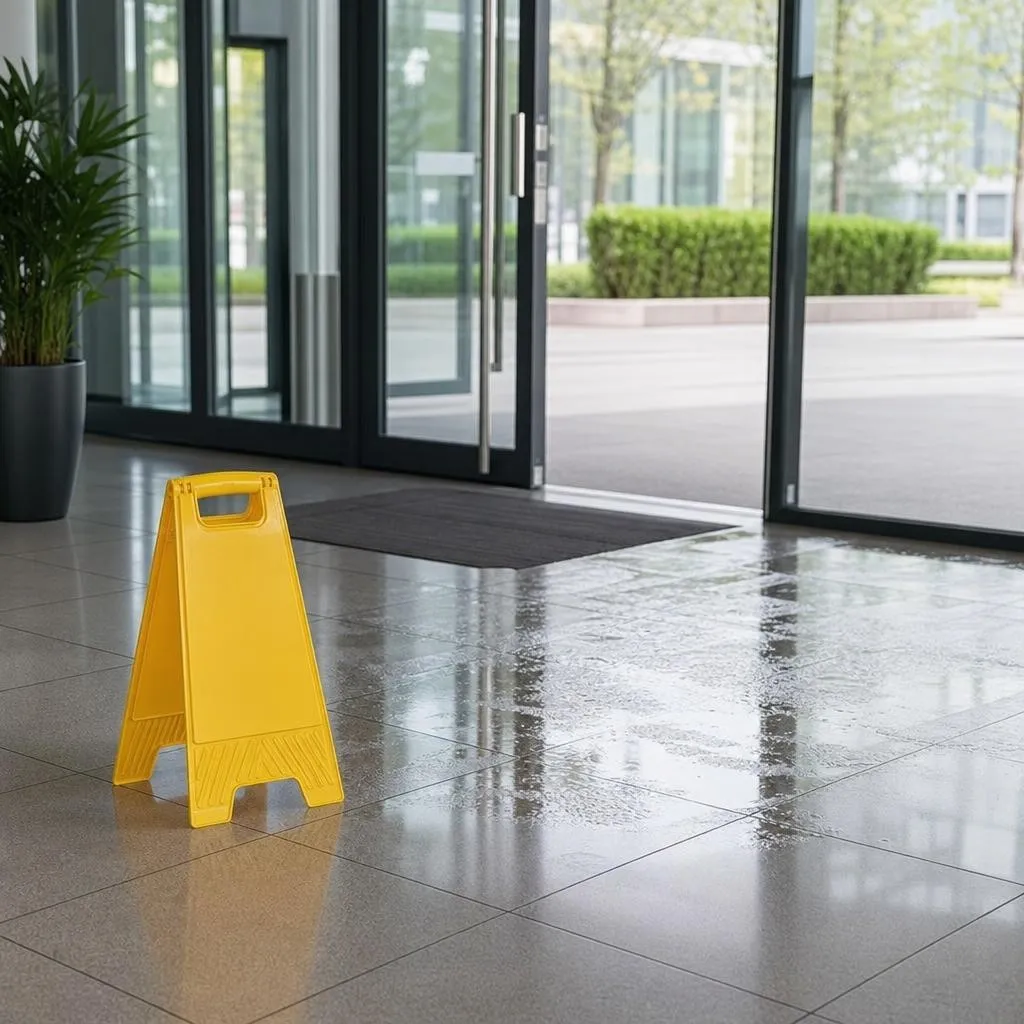
Wet floor signs don’t prevent slips if they’re placed too late or used too often in the wrong way. The goal is to warn early, slow down foot traffic, and keep people on the driest path.
Where to place wet floor signs in rainy season
- At the entrance, not just beside the puddle. People need a warning before they step onto the wet area.
- At transitions: doorway thresholds, elevator lobbies, stair landings, restroom entrances.
- Along the route: if water is being tracked down a corridor, use additional signs or cones to narrow the path.
Signage options (what works best in real spaces)
| Tool | Best use | Why it helps | Trade-off |
|---|---|---|---|
| A-frame “Caution Wet Floor” sign | Short-term wet areas near entry/restrooms | Visible and familiar | Can become “background noise” if left out all day |
| Cones with a short barrier line | Lobby puddles, active mopping zones | Physically slows/redirects people | Takes more space in narrow hallways |
| Directional stanchions / rope | Condo lobbies, event foot traffic | Guides people to dry path | Needs staff to set up correctly |
| Floor runner + “use this path” setup | Long entry corridors | Encourages a safer route without clutter | Runner must be secured and kept dry |
Simple rule for signage
If you’re actively drying or mopping, block off the wettest section instead of trusting people to step carefully. A sign is a warning; a barrier is prevention.
Layer 3: Drying methods that remove water fast (without leaving slippery residue)
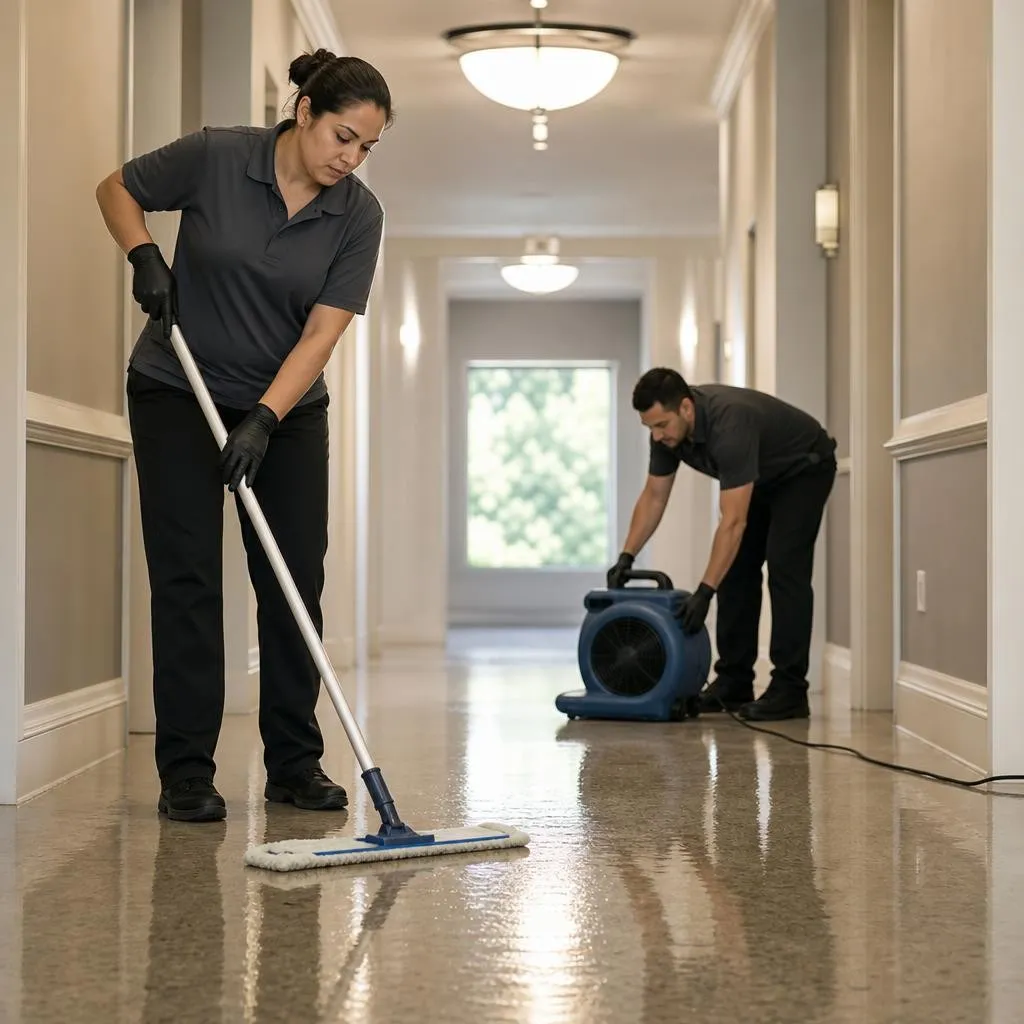
During CDO rainy season, humidity slows evaporation. That means “air dry” often isn’t enough—especially for glossy tile and smooth vinyl.
The fastest wet-floor response sequence
- Remove the source: add/adjust mats, stop dripping umbrellas, clear standing water at the doorway.
- Pick up the bulk water first: squeegee toward a drain or absorb with towels.
- Dry with microfiber (not a dripping mop): use a clean, wrung microfiber flat mop.
- Move air across the surface: fan or air mover aimed low across the floor speeds drying.
- Re-check after 5–10 minutes: tracked water returns quickly; plan a second pass.
Drying tools compared (choose based on your space)
| Drying method | Best for | Pros | Cautions |
|---|---|---|---|
| Squeegee + drain (or toward a pickup point) | Lobbies, ground-floor entries | Fast bulk removal | Needs a place for water to go; don’t push water under mats |
| Microfiber flat mop (dry or slightly damp) | Tile/vinyl corridors, offices | Picks up thin film and dries evenly | Must swap pads often; dirty pads smear residue |
| Wet vacuum | Larger puddles, carpet edges, post-storm cleanup | Strong water pickup | Requires maintenance and proper emptying/sanitizing |
| Fans / air movers | Humid days, repeated tracking areas | Speeds evaporation | Aim airflow across the floor, not upward |
| Absorbent towels (spot response) | Small hotspots near doors | Immediate control | Replace once saturated to avoid re-wetting |
Mopping technique that reduces slip risk
If you’re mopping during business hours, the technique matters as much as the product:
- Use a wrung mop/pad. Over-wet mopping leaves a thin film that stays slick longer.
- Work in small sections so you can fully dry each area before moving on.
- Change water frequently. Dirty water leaves grime and detergent behind, making floors feel slippery when damp.
- Rinse when needed. If a floor feels tacky or “soapy,” a rinse pass can remove leftover cleaner.
Don’t ignore the “slick even when clean” problem: wax buildup and detergent residue
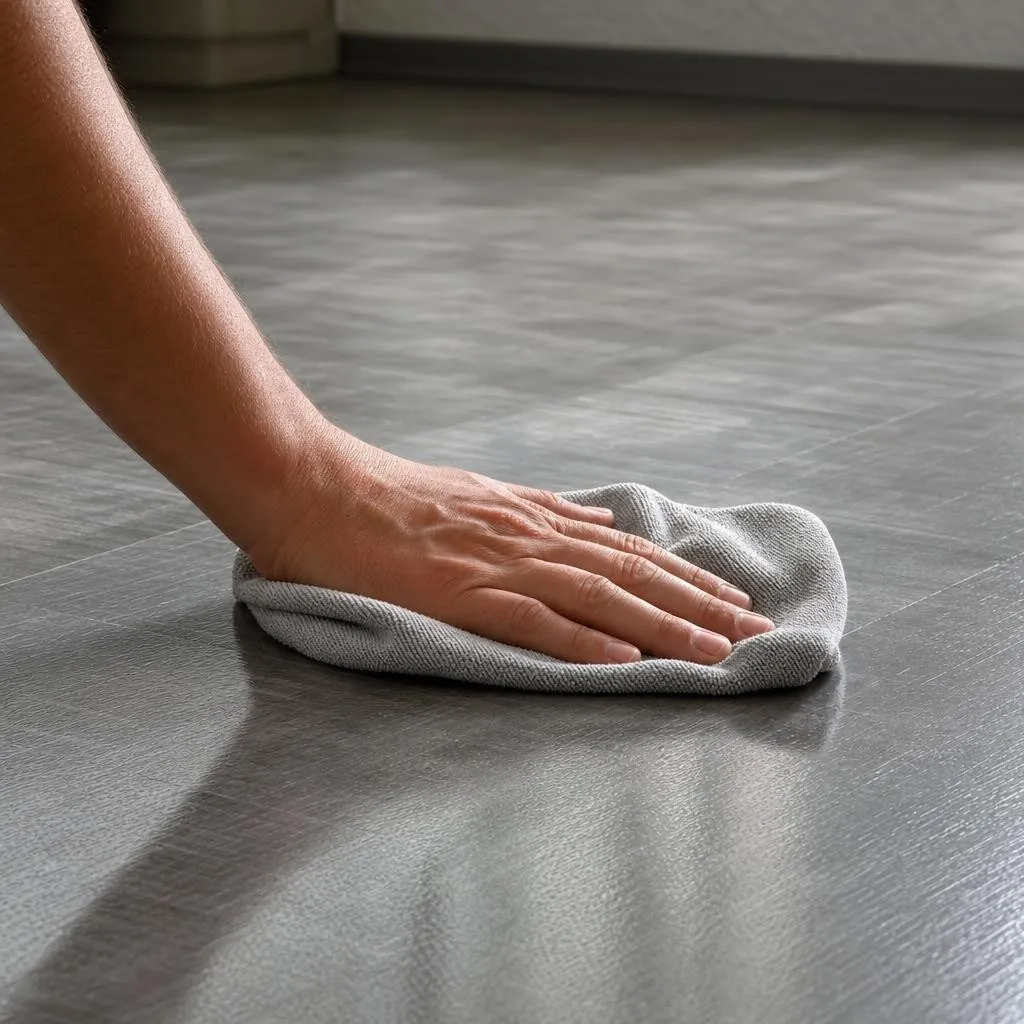
If your floors feel slippery the moment they get damp—even after you’ve dried them—there’s usually an underlying surface issue:
- Floor wax/finish buildup creates a smooth top layer that can be slick when wet.
- Detergent residue (especially from strong soap or too much product) leaves a film that reduces traction.
- Incorrect dilution makes this worse. More chemical doesn’t mean safer or cleaner; it often means more residue.
A practical approach is to:
- Review what’s being used on the floor (product type and dilution)
- Do a controlled test area (clean + rinse + dry) and compare traction
- If buildup is obvious (haze, streaking, “sticky then slippery”), consider a reset
For a step-by-step guide to identifying and fixing finish problems, see how to remove floor wax buildup and restore shine on vinyl and tile floors.
Rainy-season slip prevention checklist (office, condo, commercial, or home)
A checklist keeps things consistent—especially when different people handle cleaning and maintenance.
Daily (rainy days)
- Place scraper + wiper mats correctly and keep edges flat
- Inspect the first 5–10 meters from the entrance for tracked water
- Put wet floor signage at the entrance when tracking starts
- Dry hotspots using squeegee/towel first, then microfiber
- Swap damp mats before they become saturated
Weekly
- Deep clean mats (vacuum + wash/dry as appropriate)
- Check floor feel in entryways: any slickness when slightly damp?
- Inspect grout lines and corners for grime that holds moisture
After heavy rain or flooding nearby
- Wet-vac carpet edges and entry rugs immediately
- Fully dry underneath rubber-backed mats
- Increase airflow and run fans longer in enclosed areas
- Schedule a more thorough clean if silt/grit was tracked in
How PrimeShineCDO can help keep floors safer during rainy season
Rainy-season safety is easier when cleaning is consistent and checklist-driven—especially in offices, condos, and busy homes where foot traffic never stops. If you need help maintaining entryways, keeping common areas dry, or doing a deeper reset after heavy rain tracking, you can book a punctual team through PrimeShineCDO cleaning services in Cagayan de Oro.
The best time to ask for help is when you notice either of these:
- You’re drying the same areas repeatedly, but they keep turning slick
- Floors look clean, yet feel slippery when damp (often residue or finish buildup)
A focused rainy-season plan—mats placed right, signage used correctly, and fast drying methods—goes a long way toward preventing slips without disrupting your day.