How To Remove Common Household Stains Safely (Grease, Coffee, Ink, Mold Spots) Without Damaging Surfaces
Tired of stubborn spills? Learn how to remove common household stains safely (grease, coffee, ink, mold spots) without damaging surfaces—easy, PH-friendly fixes that work.
Feb 23, 2026
Need a spotless space without interruptions?
PrimeShineCDO Cleaning Services uses punctual teams, clear checklists, and efficient cleaning methods for residential cleaning, sofa cleaning, carpet cleaning, and post-construction cleaning.
Contact UsHousehold stains feel personal—like your home is “losing the fight” one spill at a time. 😅 But you don’t need harsh chemicals (or risky scrubbing) to win. This guide walks you through how to remove common household stains safely (grease, coffee, ink, mold spots) without damaging surfaces—using methods that work in real PH homes, with humidity, mixed materials, and everyday mess.
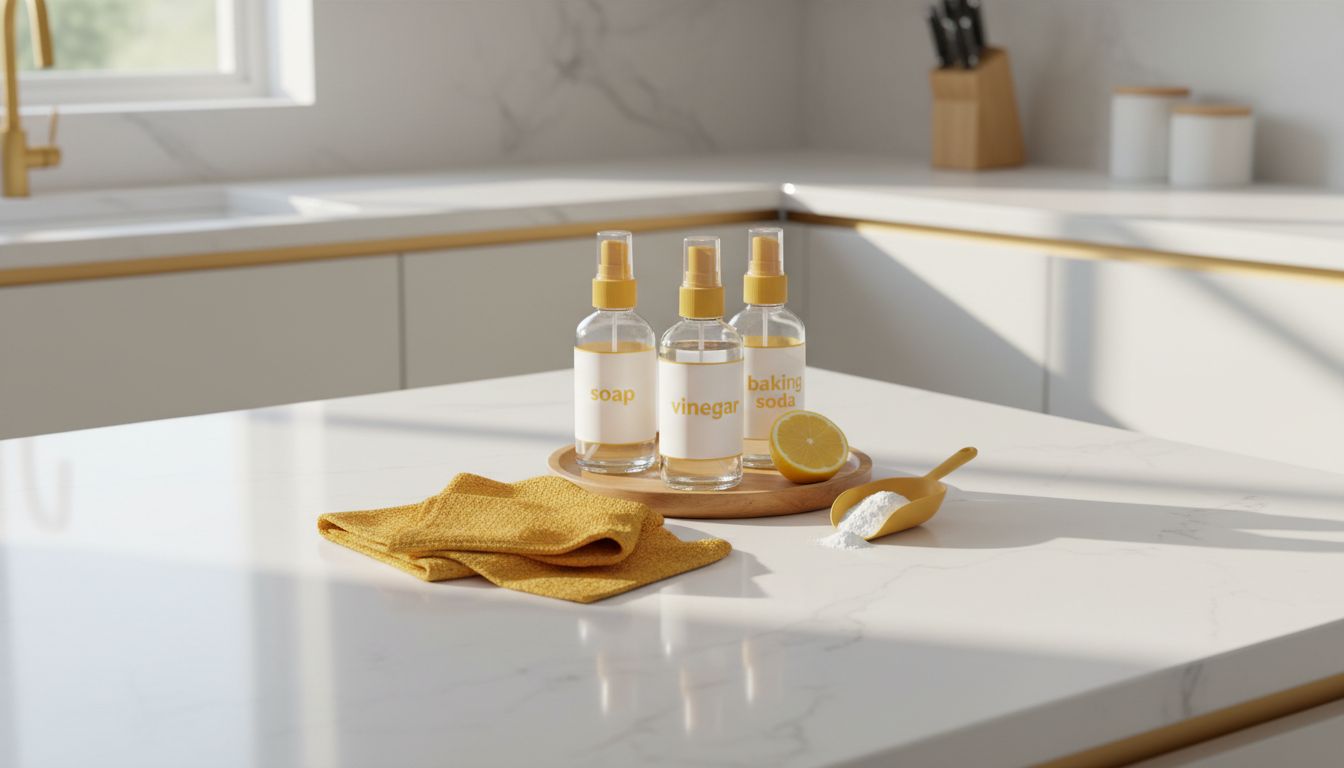
Before you start: the “don’t damage it” rules ✅
Most surface damage happens because of heat, over-wetting, and abrasion—not because the stain is “impossible.”
The 60-second safety checklist (do this every time)
- Blot, don’t rub (rubbing drives stain deeper and frays fabric fibers).
- Test in a hidden spot (behind a cushion, under a table edge).
- Start mild, then level up (soap → alcohol → peroxide/bleach only when appropriate).
- Control moisture (especially on wood, drywall, grout, and upholstery).
- Rinse + dry (leftover cleaner attracts dirt and leaves rings).
- Never mix bleach + acids (like vinegar) or bleach + ammonia—dangerous fumes.
The takeaway is clear: stain removal is chemistry + patience, not force.
Quick “safe choices” by surface (cheat sheet)
| Surface | Safest first-step cleaner | Avoid | Why |
|---|---|---|---|
| Painted walls | Warm water + a drop of dish soap | Abrasive pads, too much water | Can dull paint or lift it |
| Tile & grout | Dish soap, then baking soda paste | Acid on natural stone | Acid can etch stone |
| Natural stone (marble/granite) | pH-neutral stone-safe cleaner | Vinegar, lemon, strong acids | Etching + loss of polish |
| Wood (sealed) | Slightly damp microfiber + mild soap | Soaking, steam, harsh solvents | Swelling, whitening, warping |
| Fabric/sofa | Small amount of mild detergent, blotting | Over-wetting, colored towels | Water marks, dye transfer |
| Carpet | Blot + mild detergent solution | Scrubbing hard, too much product | Fiber damage + sticky residue |
If you want a pro-grade baseline routine for your whole house, pair this with a schedule like in this deep cleaning checklist for busy homeowners.
Your stain-removal kit (simple, safe, effective) 🧰
You don’t need a cart full of products. You need the right ones.
Essentials
- Microfiber cloths + white absorbent towels (prevents dye transfer)
- Dishwashing liquid (mild degreaser)
- Baking soda
- White vinegar (for some stains/surfaces—not stone)
- 70% isopropyl alcohol (great for ink, adhesives)
- 3% hydrogen peroxide (great for organic stains—use carefully)
- Soft brush / old toothbrush (for grout texture)
- Gloves + good ventilation
Mix-and-use reference (safe starter formulas)
| Solution | Mix | Best for | Not for |
|---|---|---|---|
| Mild soap spray | 2 cups warm water + 1/2 tsp dish soap | General wiping, coffee pre-treat | Heavy grease alone |
| Baking soda paste | Baking soda + a few drops water | Grout, gentle abrasion | Delicate paint finishes |
| Alcohol dab | Use 70% IPA on cloth/cotton | Ink, marker | Some painted/varnished surfaces (test!) |
| Peroxide dab | Use 3% peroxide on cloth | Mold spots on light grout, organic stains | Colored fabrics (may lighten) |
Watch the technique in action 🎥
A lot of stain removal is motion control—how you blot, how you rinse, and when you stop.
1) How to remove grease stains safely (kitchen oil, food splatter, body oils) 🍳
Grease is the classic “looks worse after cleaning” stain—because it smears and spreads.
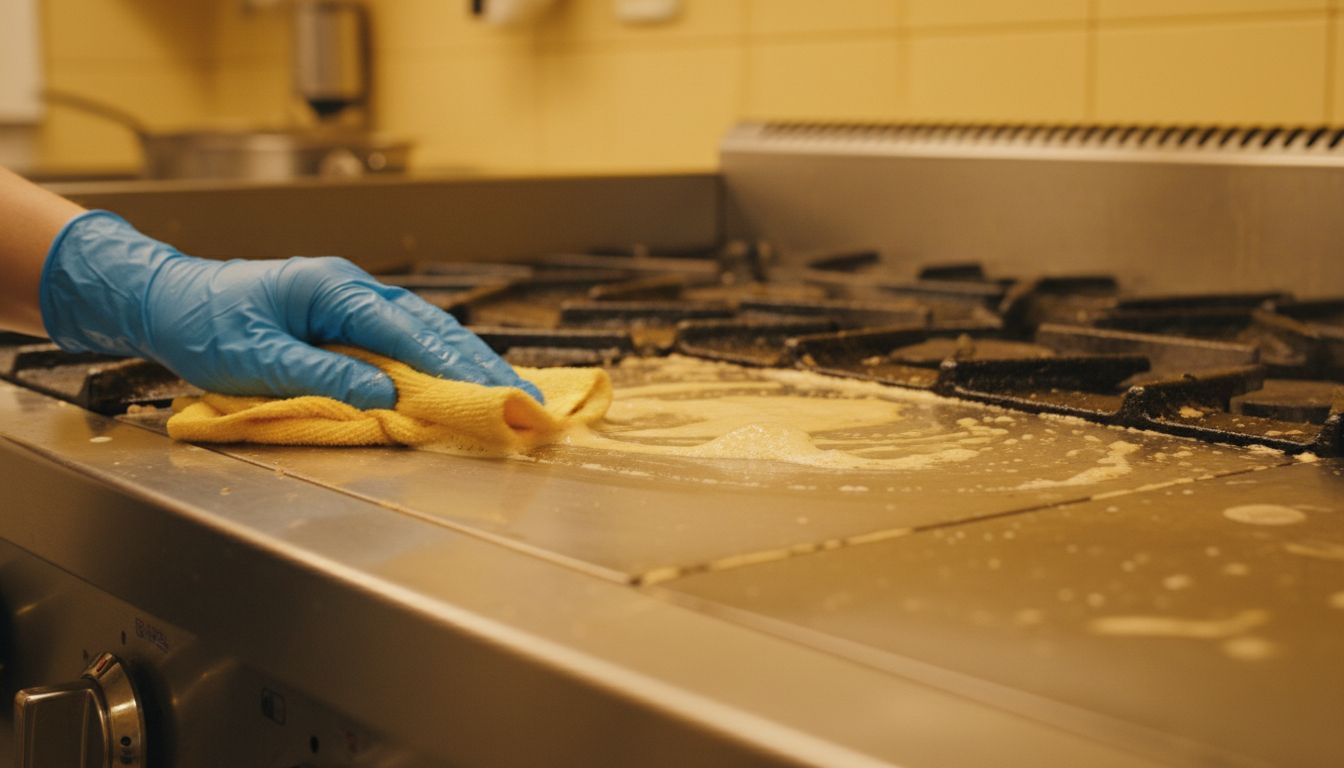
The safe grease-removal method (most surfaces)
- Lift excess grease with a dry paper towel (don’t wipe wide—fold and dab).
- Spray mild soap solution and let it sit 2–3 minutes.
- Blot and wipe in one direction using a clean microfiber.
- Rinse wipe (plain water on cloth) to remove soap film.
- Dry immediately.
If grease is stubborn (cabinet fronts, backsplash, range hood)
- Sprinkle baking soda on a damp cloth and gently rub only the greasy area.
- Wipe clean, rinse, dry.
Grease on fabric upholstery (sofa, dining chairs)
- Blot to remove excess oil.
- Sprinkle baking soda or cornstarch on the spot.
- Let sit 15–30 minutes to absorb oils.
- Vacuum thoroughly.
- If needed, blot with a tiny amount of mild detergent solution, then blot with plain water.
- Dry with airflow (fan), not heat.
Let’s be honest: upholstery grease is where DIY goes sideways fast—over-wetting leaves rings and odor. If your sofa is high-value or the stain is old, check PrimeShineCDO’s service options and save yourself the trial-and-error.
Grease on painted walls
- Use barely damp microfiber + a drop of dish soap.
- Don’t use abrasive pads.
- Rinse with a clean damp cloth and dry.
2) How to remove coffee stains safely (cups, spills, brown rings) ☕
Coffee is a tannin stain. It likes fabric and porous surfaces, and it becomes harder once it dries.
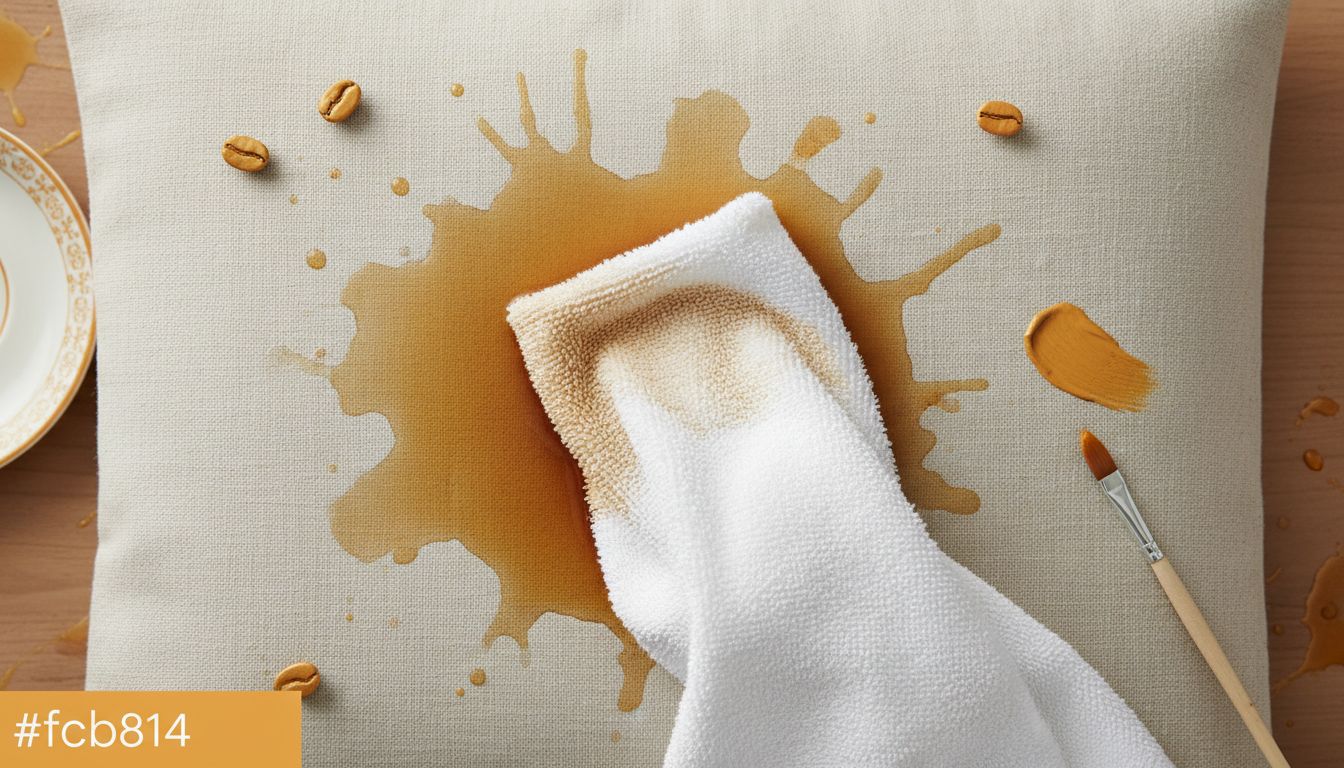
Coffee on fabric (clothes, sofa, curtains)
- Blot immediately (press, lift, move to a clean towel area).
- Apply mild soap solution—don’t soak.
- Blot from the outside edge toward the center (prevents spreading).
- Blot with plain water to rinse.
- Press with a dry towel to pull moisture out.
- Air-dry. If a ring appears, lightly dampen the whole area around it and blot again to even it out.
Coffee on carpet
- Same steps as fabric, but finish by:Blotting with plain water twice (residue is what attracts re-soiling).Putting a folded towel on top with a small weight for 10 minutes to wick moisture.
If you’re deciding whether it’s worth calling help for carpet stains, compare methods in this carpet cleaning methods guide.
Coffee rings on mugs/thermos
- Make a paste of baking soda + a few drops water.
- Rub with a soft sponge, rinse well.
Coffee on sealed wood tables
- Wipe quickly with slightly damp cloth, then dry.
- If it left a dull spot, avoid aggressive rubbing—finish damage is different from a stain.
3) How to remove ink stains safely (ballpen, marker, printer ink) 🖊️
Ink is tricky because the best remover (alcohol) can also damage finishes. Your superpower here is testing first.
Ink on fabric upholstery or clothing (ballpen)
- Place a white towel under the stain (so ink transfers downward).
- Dab (don’t pour) 70% isopropyl alcohol onto a cotton pad.
- Blot the stain—swap to a clean pad as ink lifts.
- Once most ink is removed, blot with mild soap solution.
- Blot with plain water, then dry.
Ink on leather or faux leather
- Use a barely damp cloth first.
- If it remains, dab alcohol very lightly and immediately wipe with a clean damp cloth.
- Condition leather after (if you have leather conditioner).
- If the leather is dyed or delicate, stop early—color loss is permanent.
Ink on painted walls
- Start with mild soap solution.
- If needed: lightly dab alcohol on a cotton swab and touch only the ink line.
- Stop once the mark lifts. Overdoing it can strip paint sheen.
Ink on wood (sealed)
- Don’t scrub. Test alcohol in a hidden spot.
- If the finish turns cloudy or sticky, stop—call a pro.
If you want a deeper, fabric-specific breakdown (because upholstery materials behave very differently), read this upholstery cleaning guide.
4) How to remove mold spots safely (bathroom grout, walls, ceilings) 🌧️🧼
In Cagayan de Oro’s humidity, mold spots can pop up fast—especially in bathrooms, laundry areas, and poorly ventilated rooms. The goal is: remove the spot + reduce moisture, otherwise it returns.
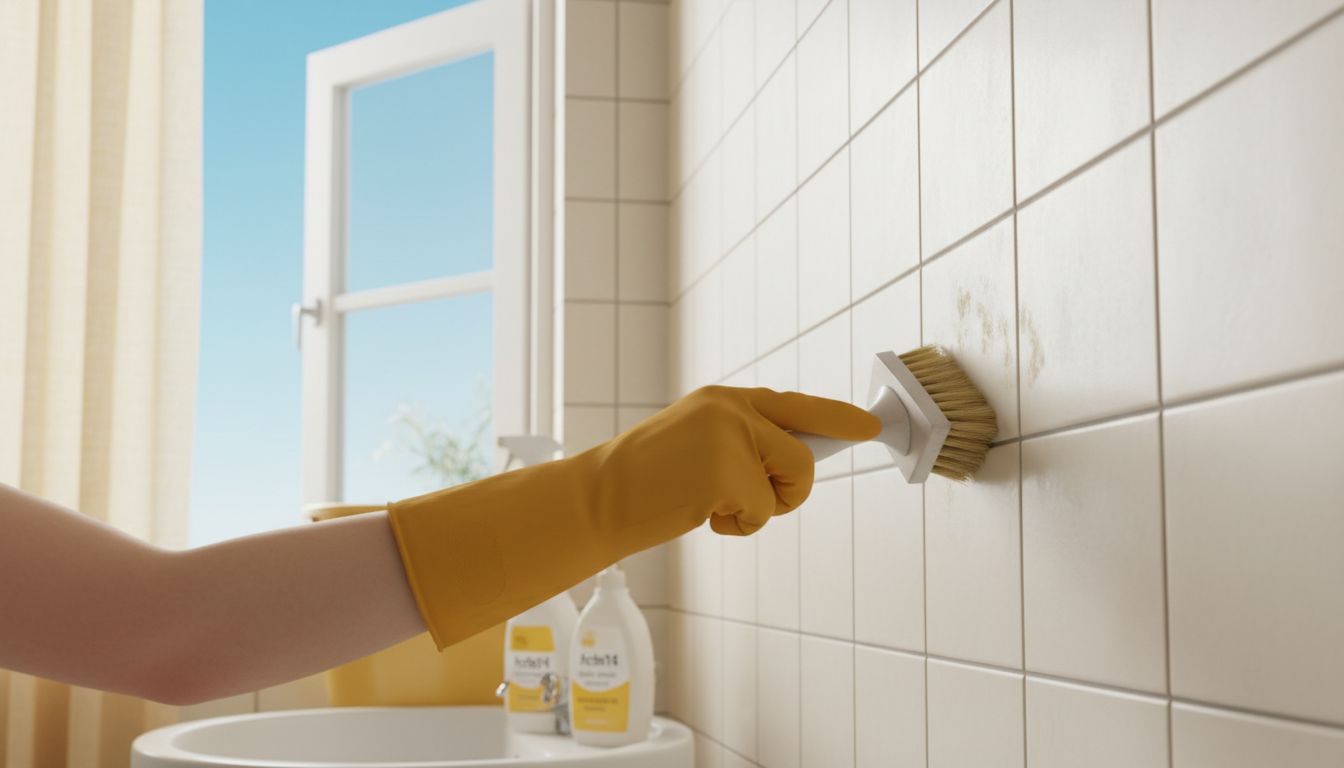
First: safety rules for mold cleanup
- Wear gloves and, if you’re sensitive, a mask.
- Ventilate (open windows/door, turn on exhaust fan).
- Don’t dry-brush mold (it can spread spores).
Mold spots on tile & grout (small areas)
- Spray warm water + dish soap; scrub lightly with a soft brush.
- Rinse and dry.
- If staining remains on light grout, dab 3% hydrogen peroxide and let sit 5–10 minutes.
- Scrub gently, rinse well, dry thoroughly.
Mold on painted walls (small specks)
- Lightly wipe with soap solution on a cloth (not a dripping sponge).
- Dry immediately.
- If it returns quickly, you likely have a moisture issue (leak, condensation, poor airflow).
Mold on silicone caulk
If it’s blackened inside the caulk, cleaning often won’t fully fix it. The reliable solution is remove and replace the caulk—otherwise it keeps ghosting back.
If you’re dealing with recurring mold, the real fix is moisture control. You’ll get practical, CDO-relevant guidance in this indoor air quality and humidity guide.
Stain-by-stain “what to use” table (fast answers) ⚡
| Stain | Best first choice | If it persists | Biggest surface risk |
|---|---|---|---|
| Grease | Dish soap + warm water | Baking soda gentle scrub | Dulling paint/finish from abrasion |
| Coffee | Blot + mild detergent | Peroxide dab on light fabrics (test) | Water rings from over-wetting |
| Ink | Alcohol dab (test first) | Repeat blotting + mild soap rinse | Stripping paint/varnish; color loss |
| Mold spots | Soap clean + dry thoroughly | Peroxide on light grout | Spreading spores; damaging paint with harsh chemicals |
Common mistakes that make stains permanent (or make them spread) 🚫
- Using hot water on protein/organic stains (sets some stains; coffee can deepen).
- Soaking cushions/carpets (causes odor, mildew, rings).
- Scrubbing fabric aggressively (frays fibers and “locks in” discoloration).
- Skipping the rinse step (residue attracts dirt, making the spot come back).
- Using vinegar on stone (etch marks look like “stains” but are actually damage).
- Trying bleach on everything (it can lighten fabrics, weaken fibers, and damage finishes).
When DIY isn’t worth it (and what to do instead) 📌
Sometimes the stain is just the symptom. The bigger problem is embedded soil, trapped moisture, or a delicate surface.
Consider professional help if:
- The stain is on sofa, mattress, carpet, or a large area of upholstery
- You smell mustiness (possible moisture in padding)
- The surface is natural stone, high-gloss wood, or specialty paint
- The stain keeps returning (common with mold and deep coffee/grease)
If you want a clear way to decide, read when hiring a cleaner pays off vs DIY. And if you’d rather skip the stress and get it handled properly, you can browse PrimeShineCDO’s cleaning services or contact the PrimeShineCDO team to ask what’s safest for your specific surface.
Quick “save this” mini-checklist 🧾✨
- Blot first, always
- Start mild (soap + water)
- Test chemicals in a hidden spot
- Control moisture (don’t soak)
- Rinse + dry to prevent rings and residue
- For mold: clean + dry + fix humidity
Malinis. Maasahan. Pang‑CDO. If you want “prime ang linis, shine ang resulta” without the guesswork, PrimeShineCDO Cleaning Services is ready when you are.